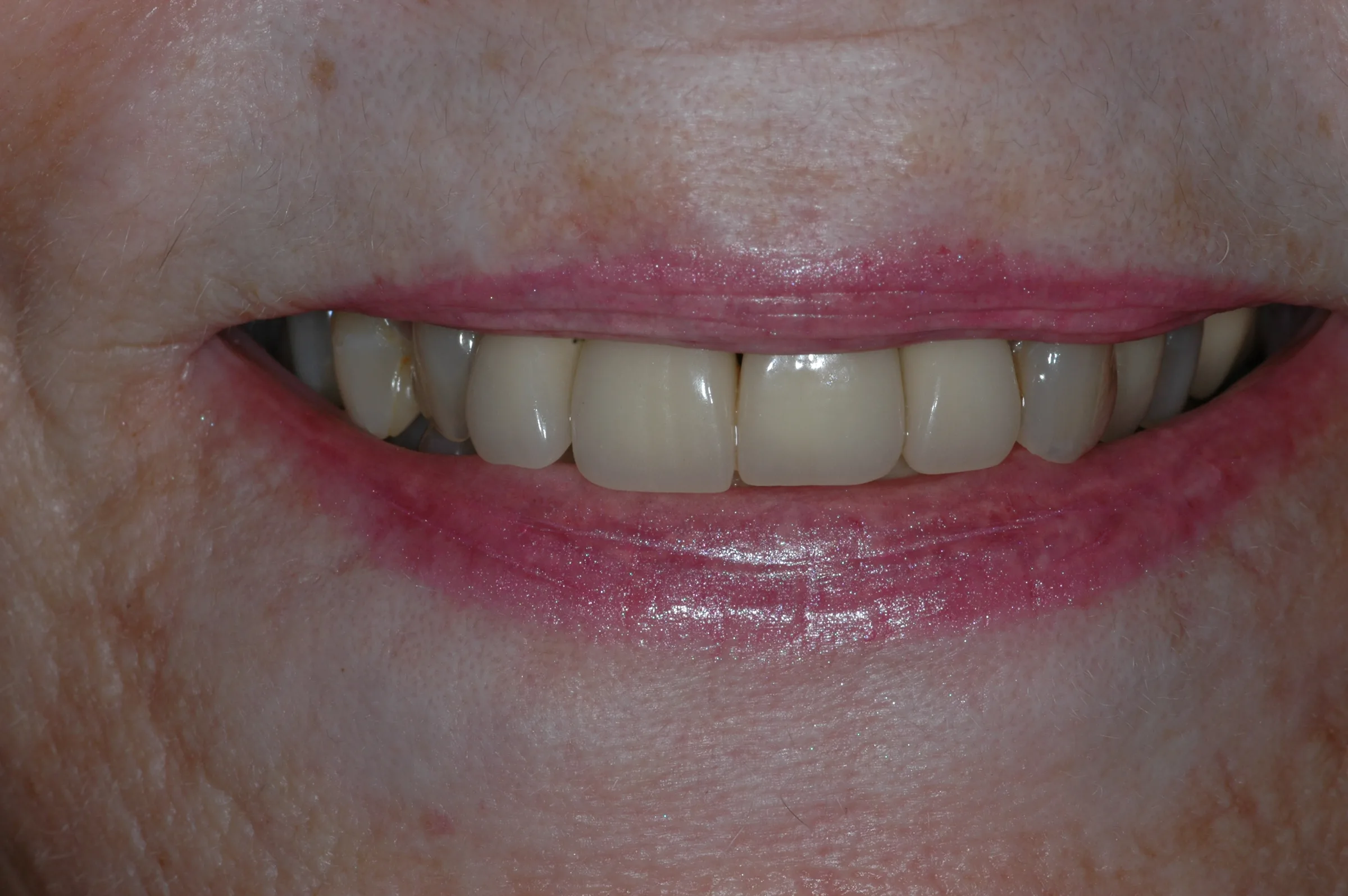
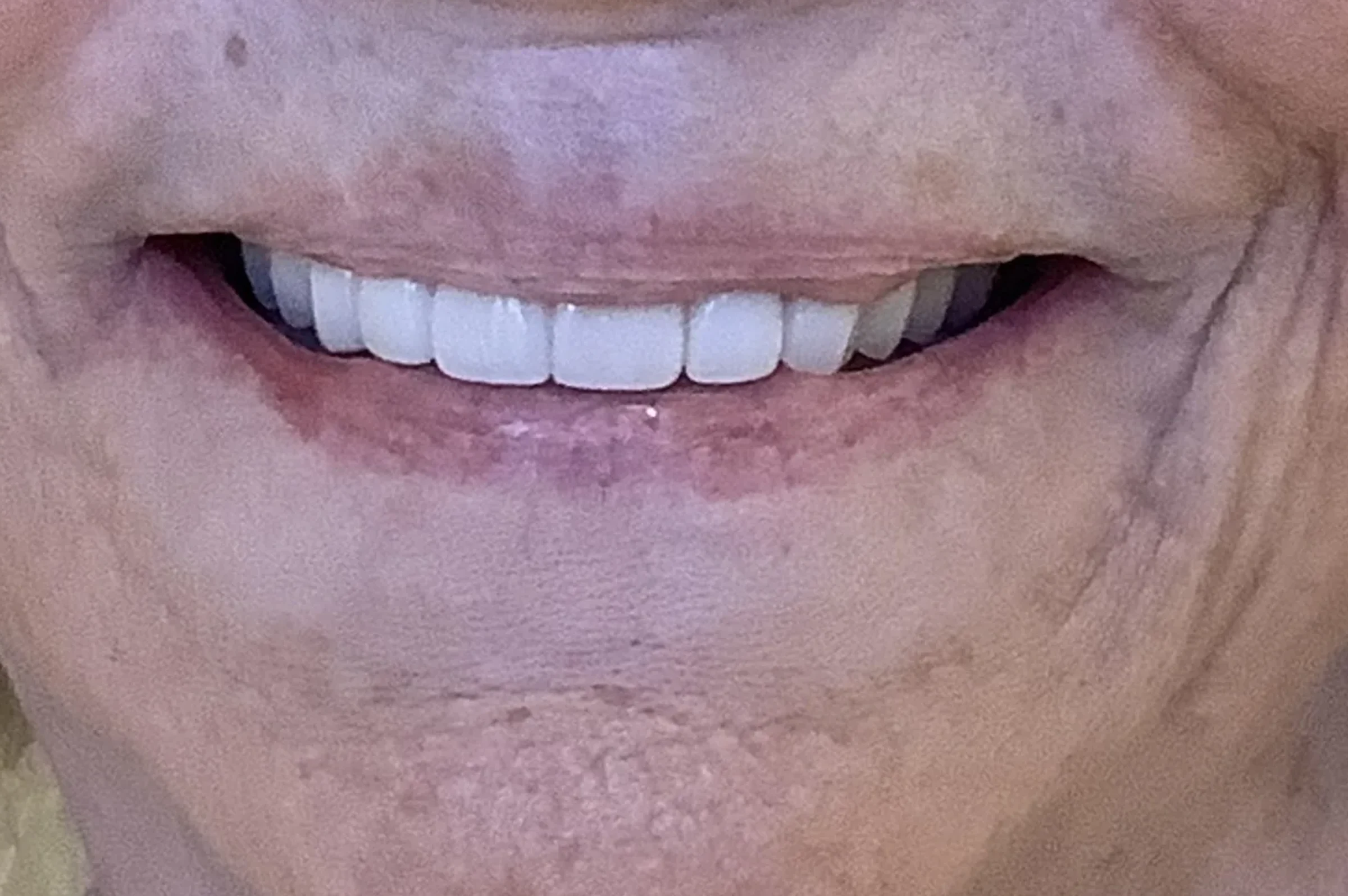
Brighter Zirconia Crown Makeover
Patient's older crowns had darkened and yellowed over time. Replaced with brighter, more lifelike zirconia crowns — a fresh look without changing the underlying teeth.


Expert, Non-Surgical
Restore worn, broken-down, or aged-looking teeth to full health, function and beauty — without unnecessary surgery or cookie-cutter solutions.
You'll approve the color, shape, and arrangement of your new smile before it's finalized — so you can expect to be satisfied with the overall appearance.
When Your Smile Doesn't Look or Feel Like You
If your front teeth have stained or yellowed in ways no amount of brushing reverses, if your old crowns no longer match the rest of your smile, if years of wear have given you teeth that look older than you feel — a smile makeover is the path back. Many patients reach this point after years of small dental fixes that never quite added up to the smile they wanted.
People suffering with painful, decayed, broken-down or missing teeth can get custom, non-surgical treatment tailored to meet their individual needs and goals.
Dr. Andrus is a master at crafting beautiful, healthy smiles, and he never pushes unnecessary procedures on a patient. "I let my patients know about all their options," says Dr. Andrus, "and help them choose the right treatment that fits their needs and budget."
Dr. Andrus has been performing smile and dental makeovers since 2001. As a board-certified prosthodontist, he specializes in this treatment and has extensive training, including a three-year ADA-accredited university residency. He is the only board-certified prosthodontist and provider in Southern Utah to offer a full range of options at a top-tier specialty level.

Real Smile Makeover Cases
Three smile makeover cases from the practice's smile gallery — a brighter zirconia crown refresh, a front-tooth cosmetic replacement, and a full-mouth makeover with zirconia. Click any pair to view full-size.
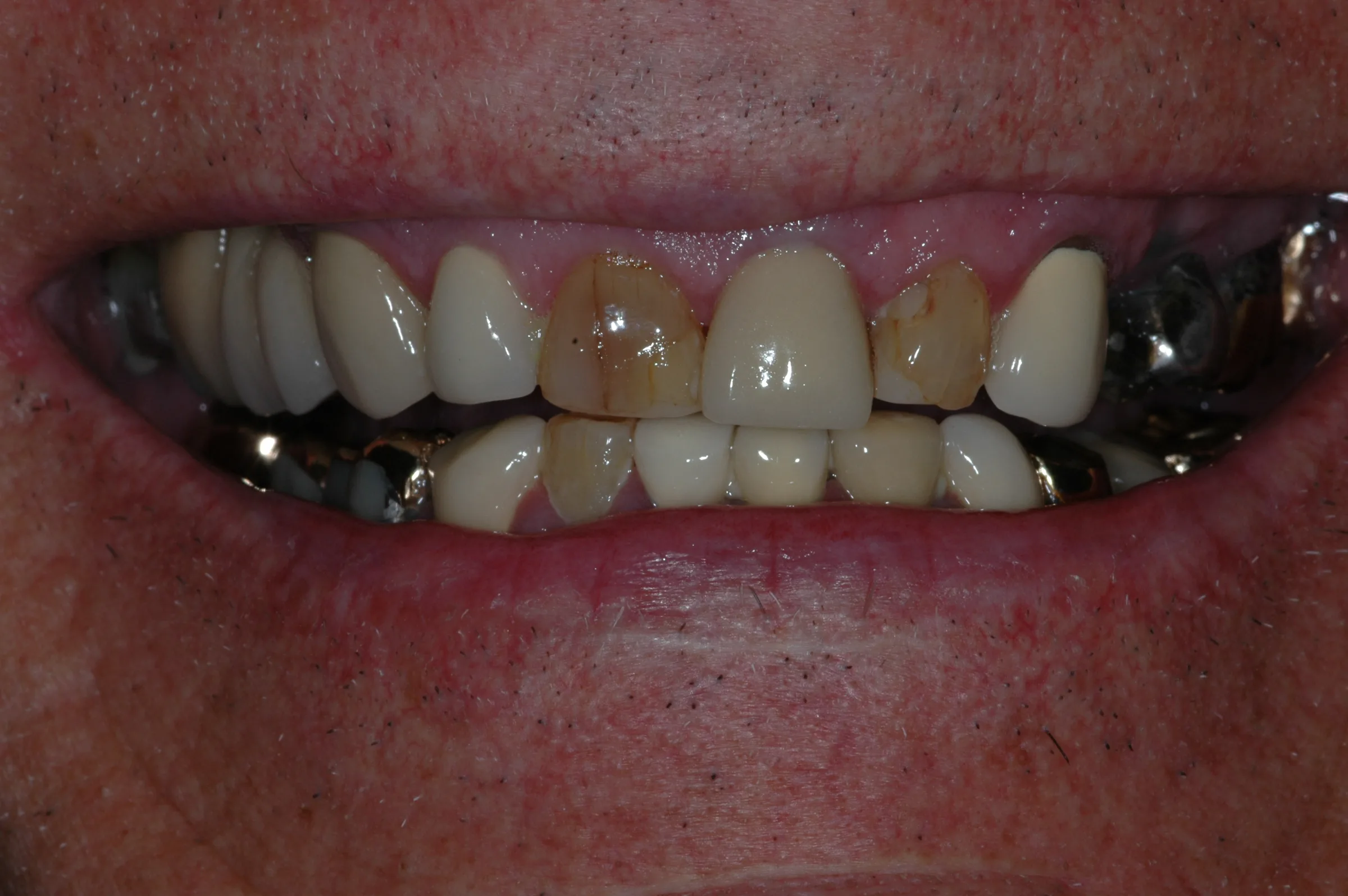
Brighter Zirconia Crown Makeover
Patient's older crowns had darkened and yellowed over time. Replaced with brighter, more lifelike zirconia crowns — a fresh look without changing the underlying teeth.
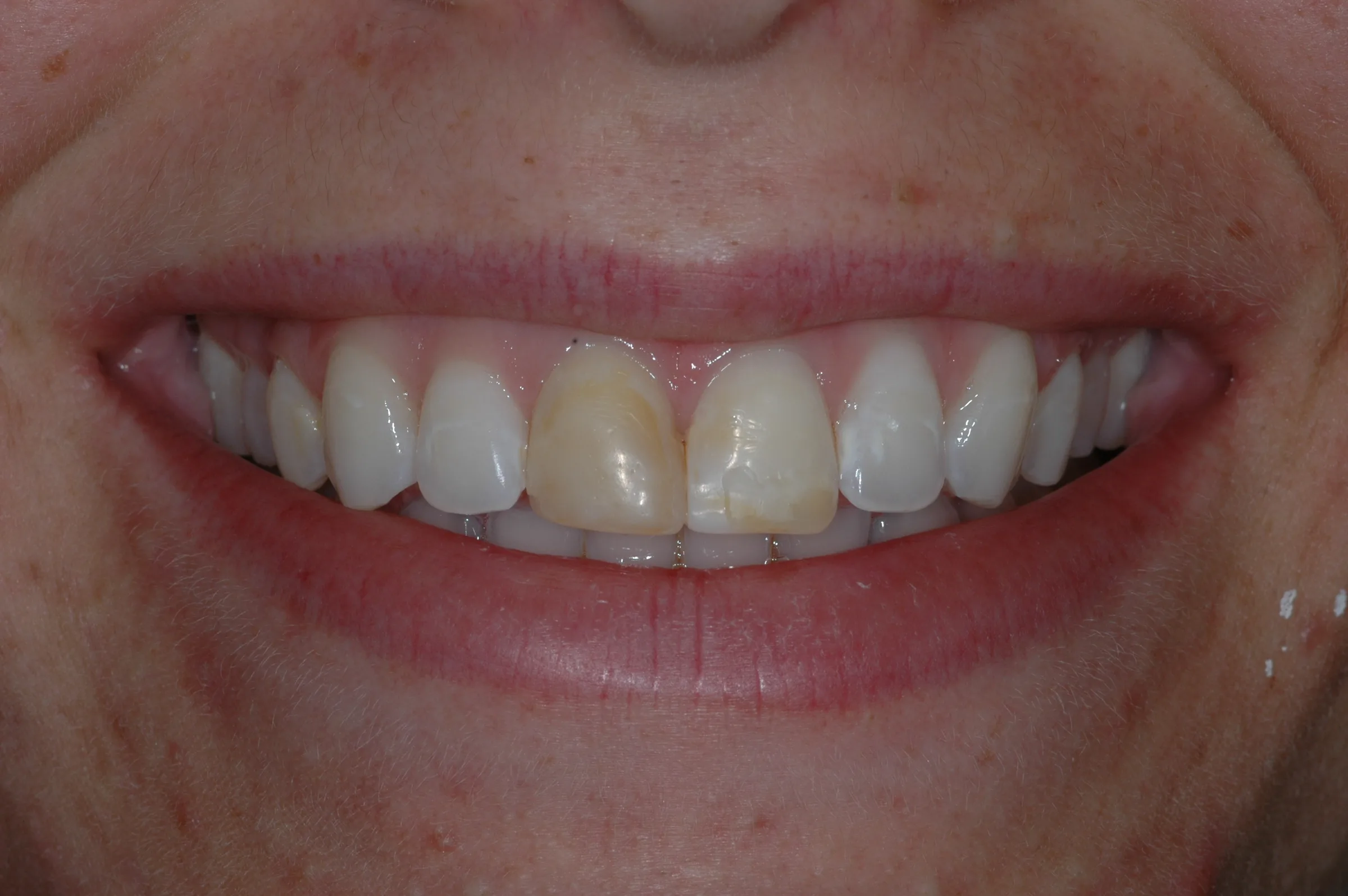
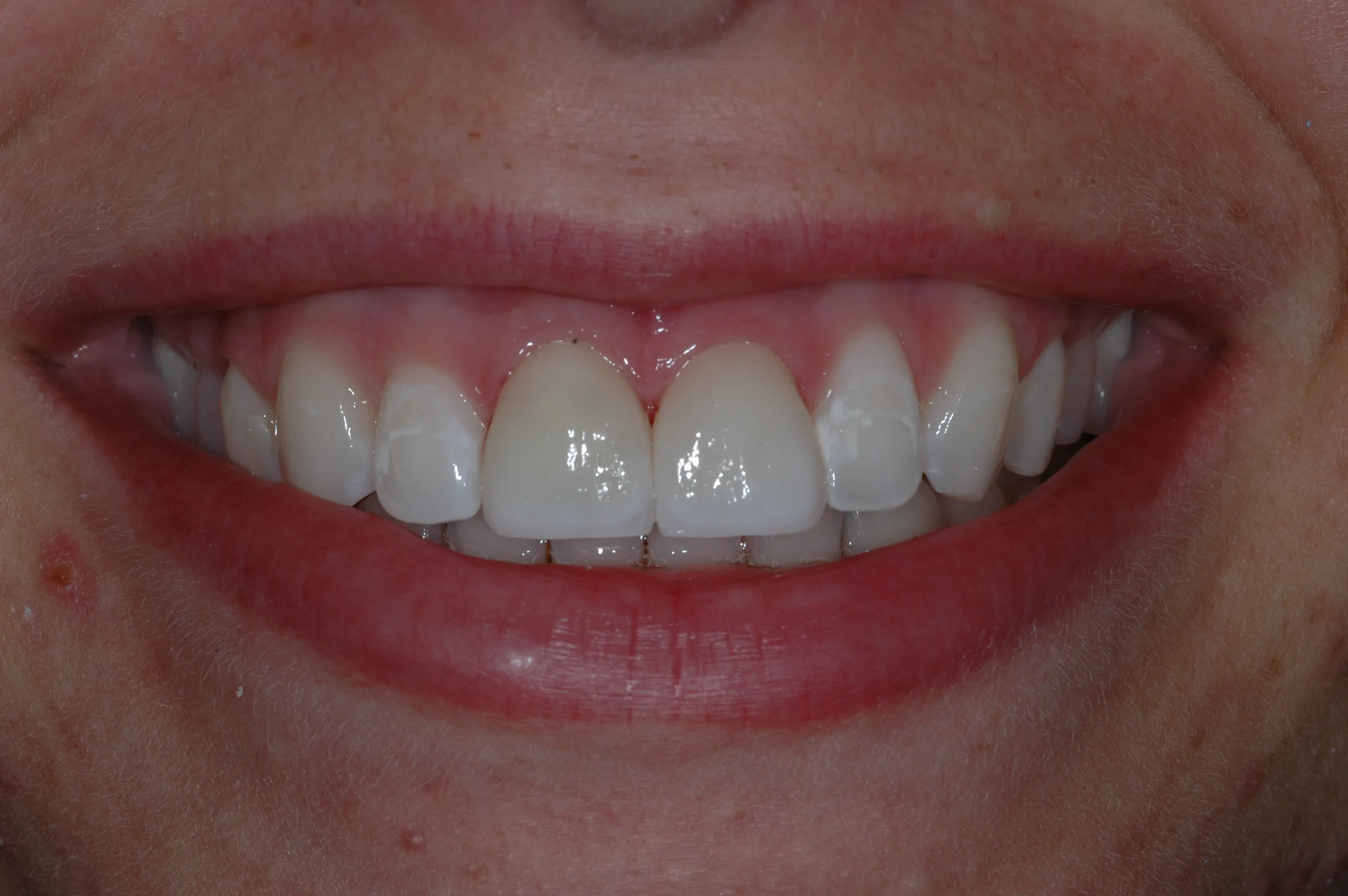
Front-Tooth Cosmetic Replacement
Patient had two front crowns that had stained and stopped matching the surrounding teeth. Replaced with new crowns that blend naturally — a small change with a big visible difference.
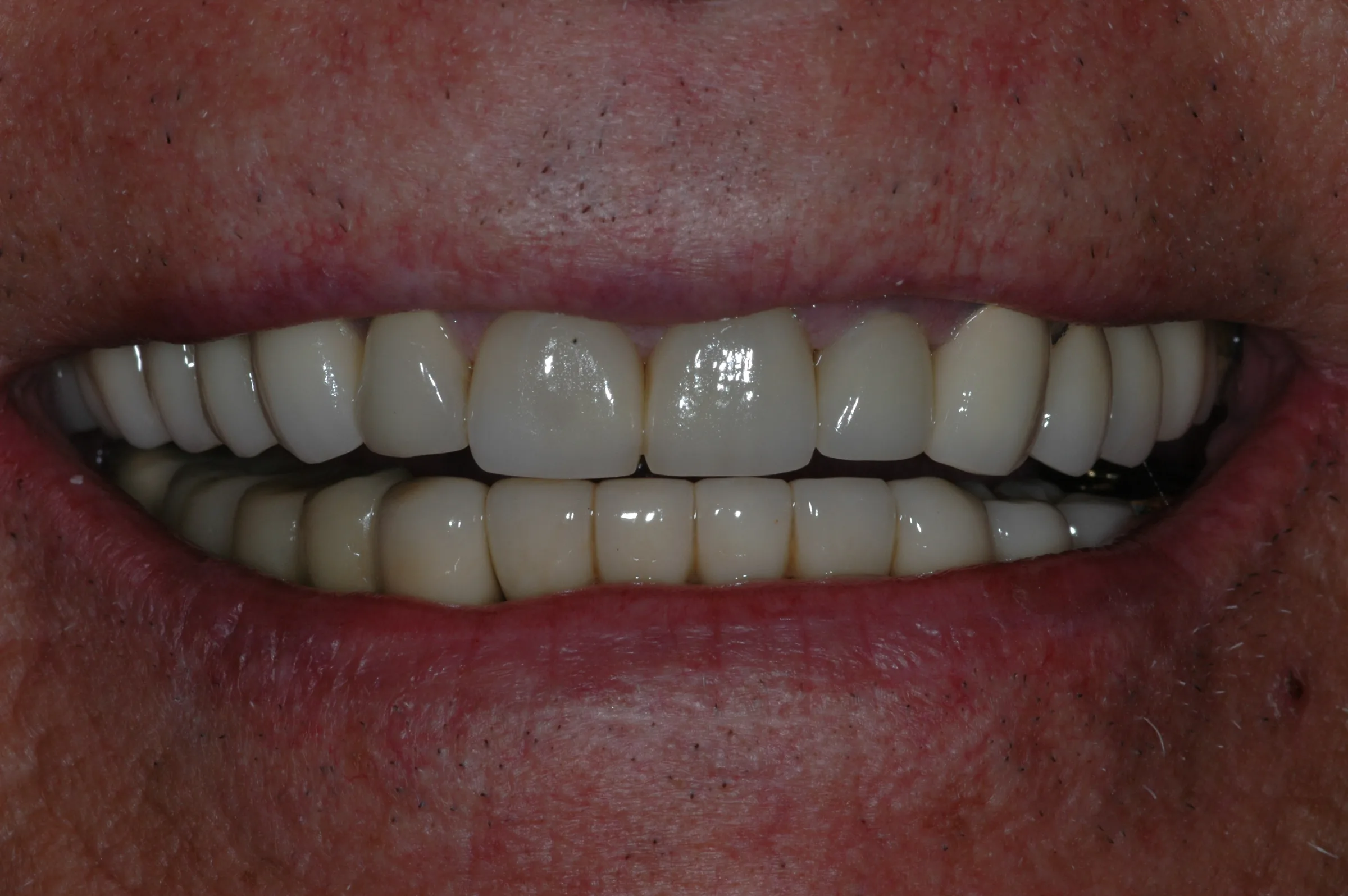
Full-Mouth Makeover with Zirconia
Many old failing restorations rebuilt as a coordinated full-mouth makeover with zirconia crowns — function and esthetics restored in the same plan.
The Range of Smile Makeover Treatment
The right approach depends on which teeth are affected, how much has worn or stained, and what you want the final result to be. Most cases use one of the four forms below.
When teeth are structurally compromised or heavily restored but the appearance is also a concern, cosmetic crowns rebuild both function and esthetics using materials such as zirconia or lithium disilicate for strength and lifelike translucency.
Thin ceramic restorations bonded to the front surfaces of teeth to improve shape, symmetry, proportion, and color while preserving as much natural tooth structure as possible.
When one or more front teeth no longer match surrounding teeth due to discoloration, wear, prior dentistry, or fracture, targeted replacement can restore harmony without changing the entire smile.
When wear, breakdown, bite collapse, or years of patchwork dentistry affect the entire smile, full-mouth rehabilitation combines restorative function and esthetics within one coordinated treatment plan.
Non-Surgical Alternatives
Unlike surgery centers that only offer surgical treatment with dental implants, Dr. Andrus also offers non-surgical treatments.
"Patients who start here first will learn about a full range of treatment options," he says, "including effective solutions they won't hear from a surgeon. Often, patients' goals can be achieved quickly and affordably without surgery and with simpler maintenance."
A makeover involves restoring teeth and chewing function by repositioning the bite and repairing damaged teeth. For some patients, teeth replacement with traditional crowns, removable partials, or fixed bridges is the best solution.
Treatment with Dr. Andrus
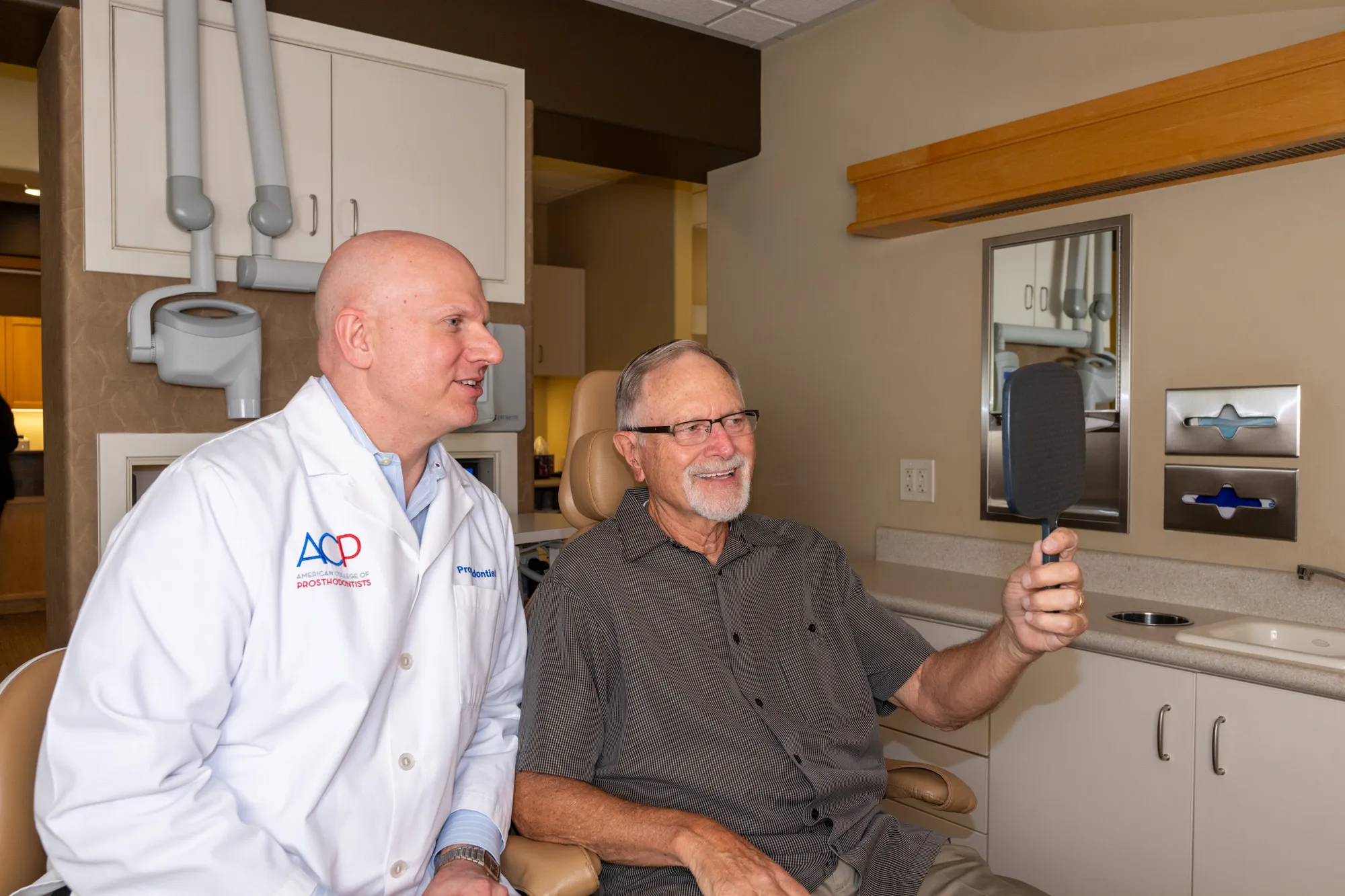
Dr. Andrus talks to you about your dental issues and learns exactly what you want to achieve. He conducts a comprehensive oral evaluation, takes photos and X-rays — including a 3D CT scan if needed — and presents treatment options.
Dr. Andrus does thorough planning for each makeover. He carefully studies all photos and X-rays, takes molds and creates diagnostic casts, then performs a test simulation so he has the end result in mind before beginning treatment.
Patients try out their new smile with a wearable trial version of their restorations. "We don't make cookie-cutter teeth," Dr. Andrus says. "Every patient is invited to review the design and request changes. They get to approve the final design before we do the work."
Materials & Technology
Preparation & Sedation
Your first appointment is a comprehensive consultation: medical and dental history, photos and X-rays, an examination of your existing teeth, and a long conversation about what you want the final result to look like. No restorative work is started at the first visit.
For longer cases or for patients with anxiety, sedation options include:
For patients with significant dental anxiety, we walk through the visit step-by-step beforehand — so the experience feels predictable rather than overwhelming.
What Sets Dr. Andrus Apart
Prosthodontics is the dental specialty dedicated to restoring and replacing teeth — and front-tooth esthetics is one of the most demanding parts of that specialty's training. Dr. Andrus is a Diplomate of the American Board of Prosthodontics and a Fellow of the American College of Prosthodontists, with three years of full-time residency specifically focused on cases like these.
“We always start with a diagnostic wax-up and provisional prototype to test our concept. Nothing definitive goes in the mouth until the patient has lived with and approved the design.” That's the practice's stated philosophy — you wear a removable preview of your new smile in your own mouth before any of it becomes final.
Many smile makeover cases don't require surgery. Dr. Andrus explicitly looks for the most conservative path that achieves the patient's goals — extracting only when necessary, preserving healthy tooth structure where possible, and reaching for crowns or veneers rather than implants when the existing teeth can support them.
Smile Makeover Patients Share Their Stories

I've never had a dentist be so meticulous and care so much about how my teeth were going to look and fit. People all say how beautiful my smile is now.
— Ann

The process was so worth the effort. Now, I have not just the ability to chew food well, but the self-esteem gained from being able to proudly offer a complimentary smile.
— Gary
Follow-Up & Long-Term Care
After final cementation, most patients return for a short bite-check at one week and again at three months while the new restorations settle in. After that, you're on a normal recall schedule — every six months for hygiene and a check of your crowns, veneers, and the surrounding teeth and gums.
New crowns and veneers are brushed and flossed like natural teeth. What this means: modern smile makeover restorations don't require special maintenance — just consistent home care and recall to catch any small issues early.
For patients who grind, a custom night guard is the single biggest step you can take to extend the life of your new restorations — the grinding that may have contributed to the original wear doesn't disappear after restoration. With consistent care and night-guard wear, modern smile makeover work commonly lasts fifteen to twenty-five years before any replacement is needed.
Dr. Andrus Answers
The terms overlap. A smile makeover usually refers to a cosmetic-driven plan focused on the front teeth and the visible smile zone — veneers, cosmetic crowns, cosmetic bonding, sometimes minor orthodontic alignment. A dental makeover (or full-mouth makeover) is broader and addresses both function and esthetics across the whole mouth. Many patients start out asking for one and end up with the other once we work through what's actually needed. The consultation answers that question case-by-case.
Looking natural is the goal. Modern materials (zirconia, lithium disilicate / e.max, layered porcelain) are designed to mimic natural tooth translucency and color. Equally important: the design phase. The new restorations are shaped to match your face, your existing teeth, and the way you smile — and you wear a removable prototype to confirm before anything is final. "We don't make cookie-cutter teeth," Dr. Andrus says.
Most patients with reasonably healthy teeth and gums are candidates. Common scenarios: stained or worn front teeth, old crowns that no longer match, gaps you've never liked, chips from grinding, or a smile that has aged in ways you want to reverse. Patients with active gum disease or untreated decay need those addressed first; patients with significant tooth loss may be better served by implants or a full-mouth plan. The consultation answers the candidacy question definitively.
Cosmetic crown or veneer cases typically span four to eight weeks across two to four appointments — including the design phase, the prototype, and the final cementation. Full-mouth makeover cases run longer — typically four to twelve months — depending on whether implants, extractions, or orthodontic alignment are part of the plan.
Slightly, at first. The new restorations are shaped to your bite, but they replace tooth surface that has been worn or damaged for years — so the way your teeth come together, the feel of your tongue against them, and the resonance when you talk all adjust slightly. Most patients adapt within a few days. The prototype phase exists exactly so this period is predictable rather than surprising.
We offer affordable financing options through Mountain America Credit Union, CareCredit® and Proceed Finance.
Cost depends on the scope — a single front-tooth cosmetic crown is materially different from a full-mouth makeover. After the diagnostic workup we provide a written treatment plan with the exact cost before any work is started. We also discuss whether the case can be staged over time to make the financial side more manageable.
We offer both surgical and effective non-surgical options — not a one-size-fits-all approach.
Find Out How Dr. Andrus Can Restore Your Smile