Full Mouth Reconstruction
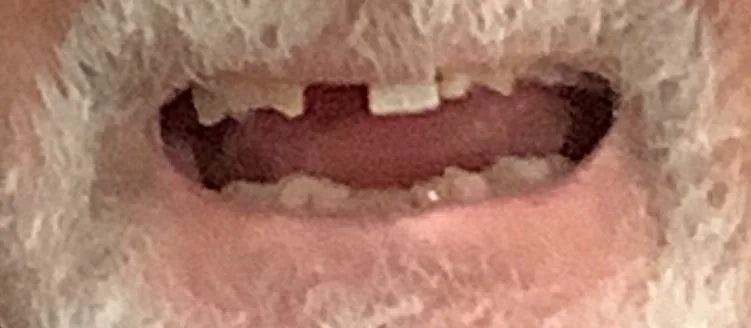
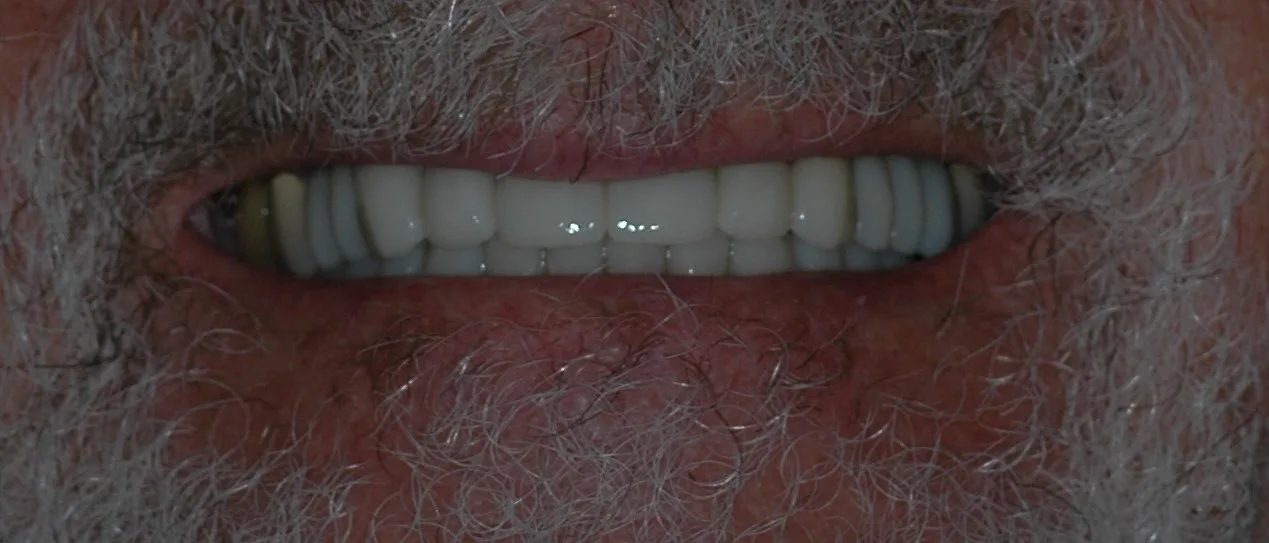
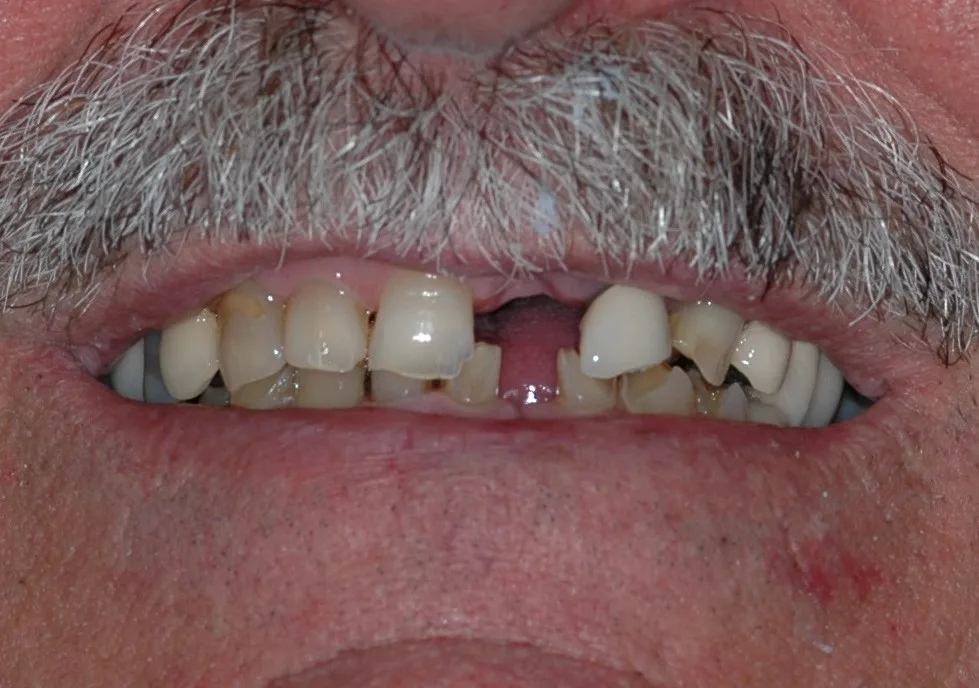
Multiple missing and damaged teeth. Reconstructed with zirconia crowns and bridges at an increased vertical dimension of occlusion.


Restoring Worn, Collapsed, or Unstable Bites
Full-mouth occlusal rehabilitation by a Board-Certified Prosthodontist who has published peer work on computer-aided occlusal adjustment.
A Functional Reset, Not a Cosmetic Patch
If your back teeth are worn down to the gums, your bite feels unstable or "off," your jaw aches at the end of the day, or every few months another crown chips, fractures, or comes loose — patching one tooth at a time may no longer be enough.
Many patients reach this point after years of grinding (bruxism), attrition, or acid erosion; after long-term tooth loss without replacement that has caused the bite to collapse; or after a decade of older crowns and bridges that keep failing one piece at a time. What this means: the whole bite has drifted, and rebuilding individual teeth doesn't solve a problem that lives in how the teeth come together.
When that's the situation, the entire bite has to be rebuilt in a coordinated way. Dentists call this bite reconstruction, or full-mouth occlusal rehabilitation. The goal is a stable, balanced bite at a healthy height — restored across multiple teeth in both arches at the same time, rather than one at a time over years.
The procedure is planned around the final bite position — how your teeth should function when the case is complete. Every detail is worked out and tested as a removable prototype you actually wear before any of it becomes permanent. The goal is not just a healthier bite, but one that feels right and looks like your own teeth — just without the wear.
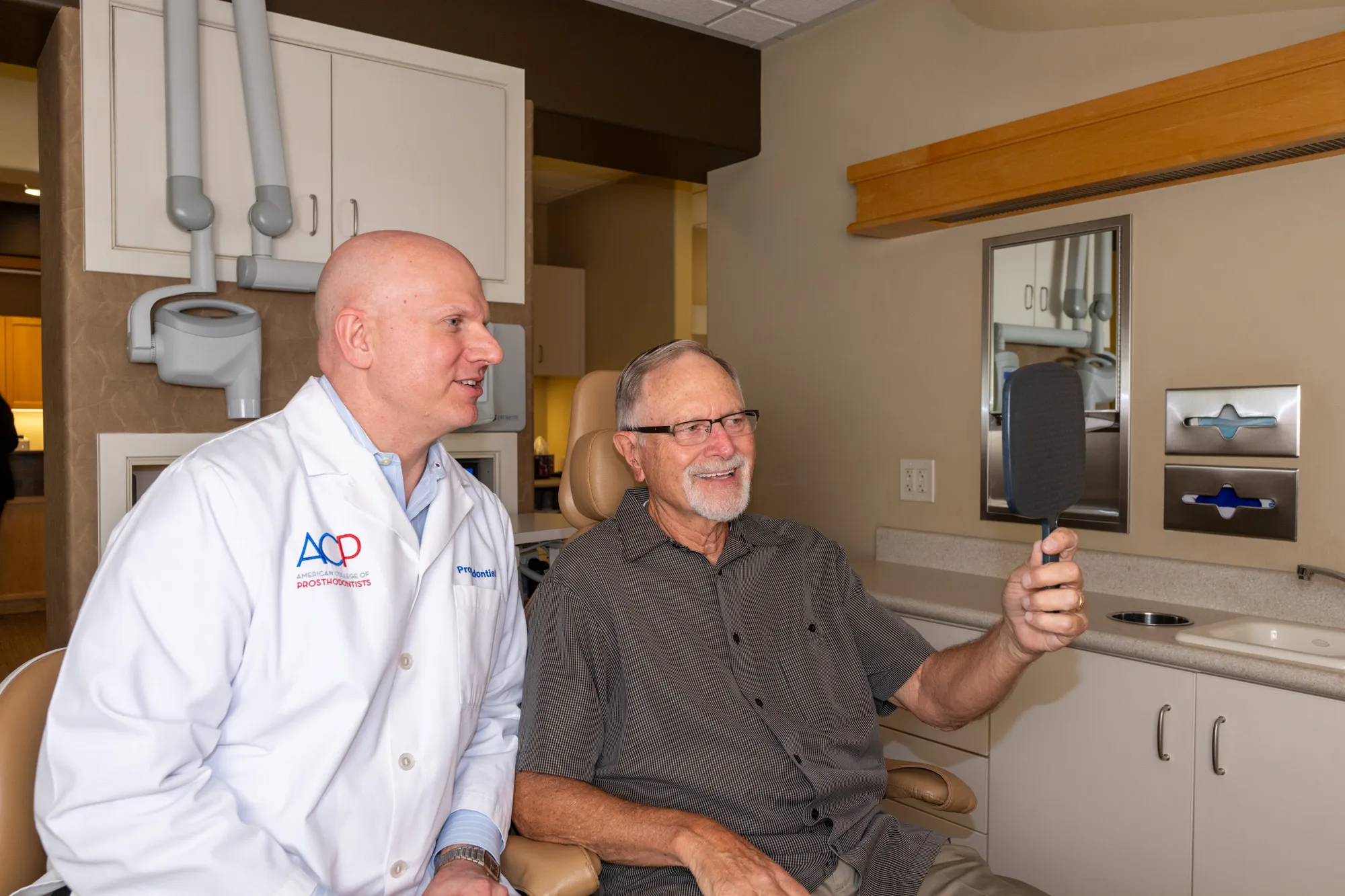
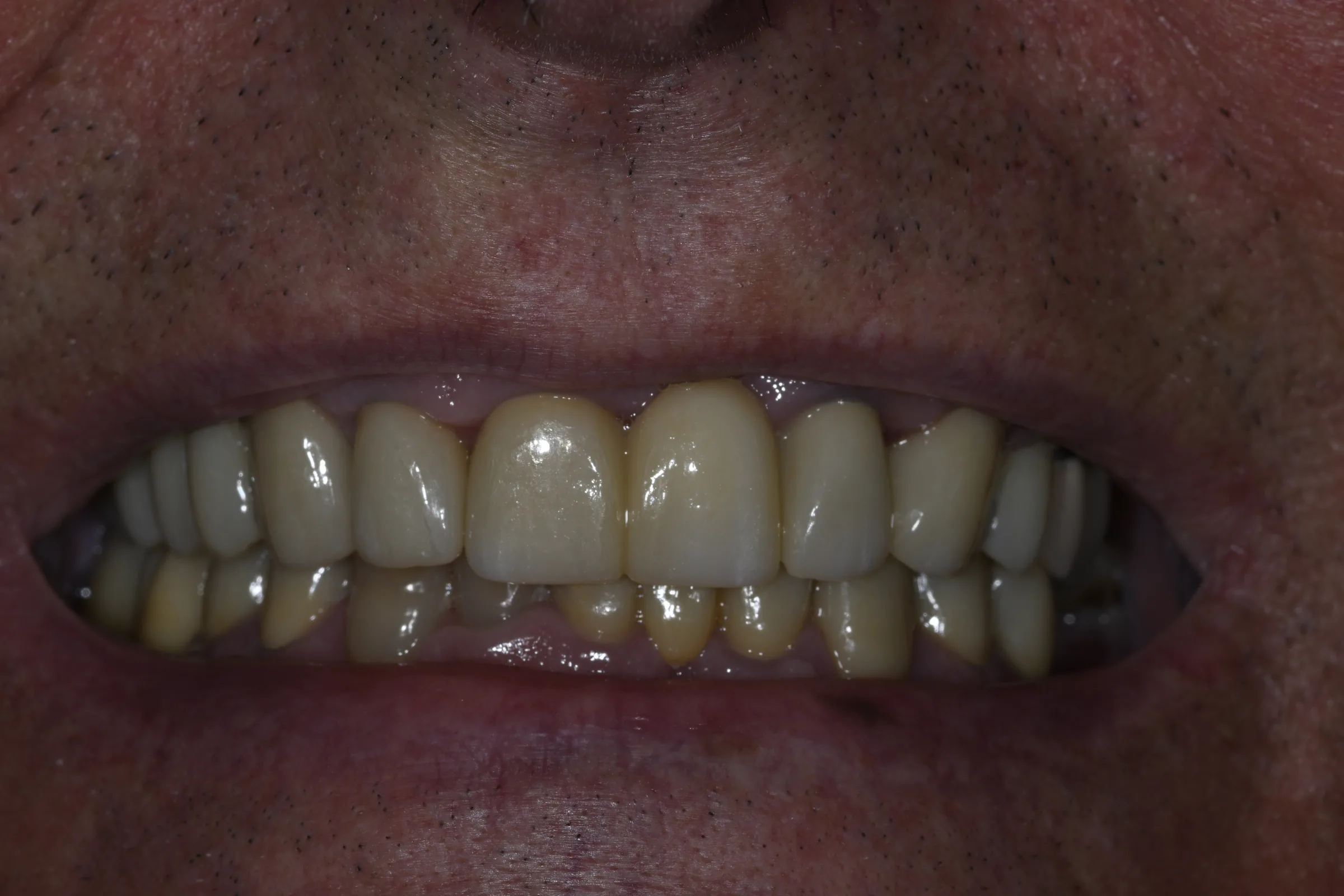
Missing and severely worn teeth restored with zirconia crowns.
Real Bite-Reconstruction Cases
Three full-mouth reconstruction cases from the practice's smile gallery — click any pair to view the case full-size with treatment notes.
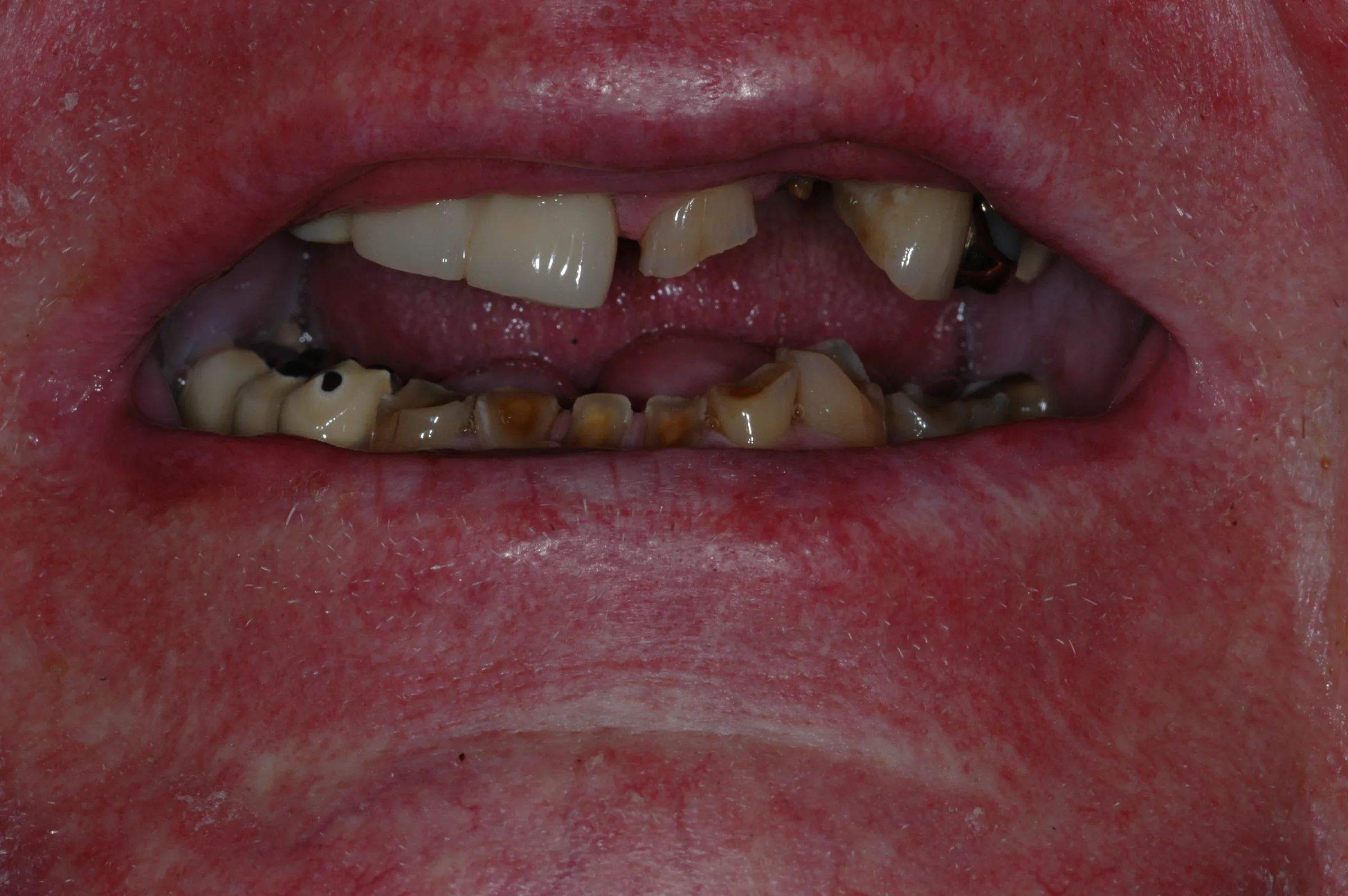
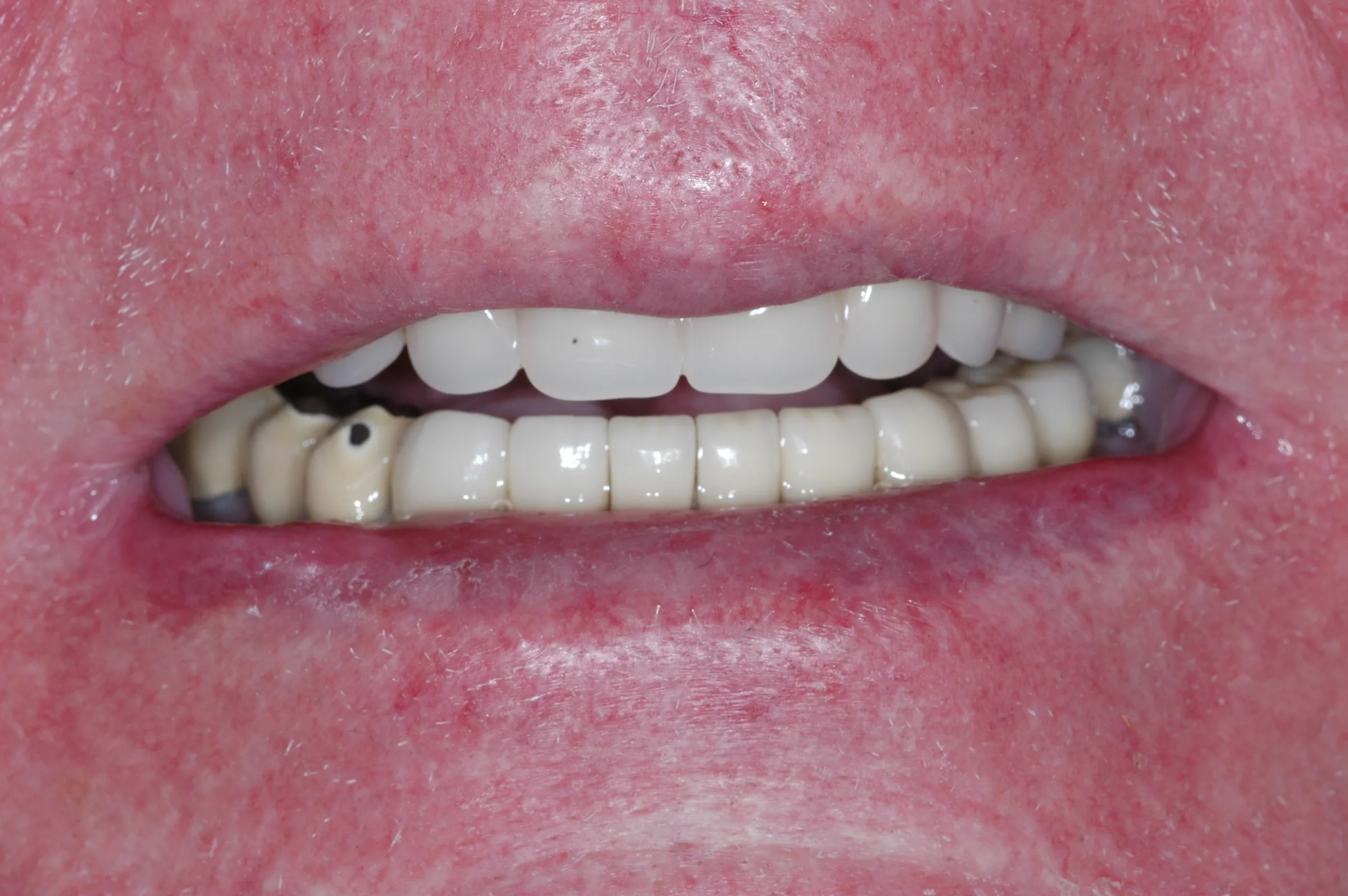
Full Mouth Reconstruction
Multiple missing and damaged teeth. Reconstructed with zirconia crowns and bridges at an increased vertical dimension of occlusion.
Full Mouth Reconstruction
Severely worn, damaged, and missing teeth. Reconstructed with crowns on the lower arch and a removable denture on the upper.
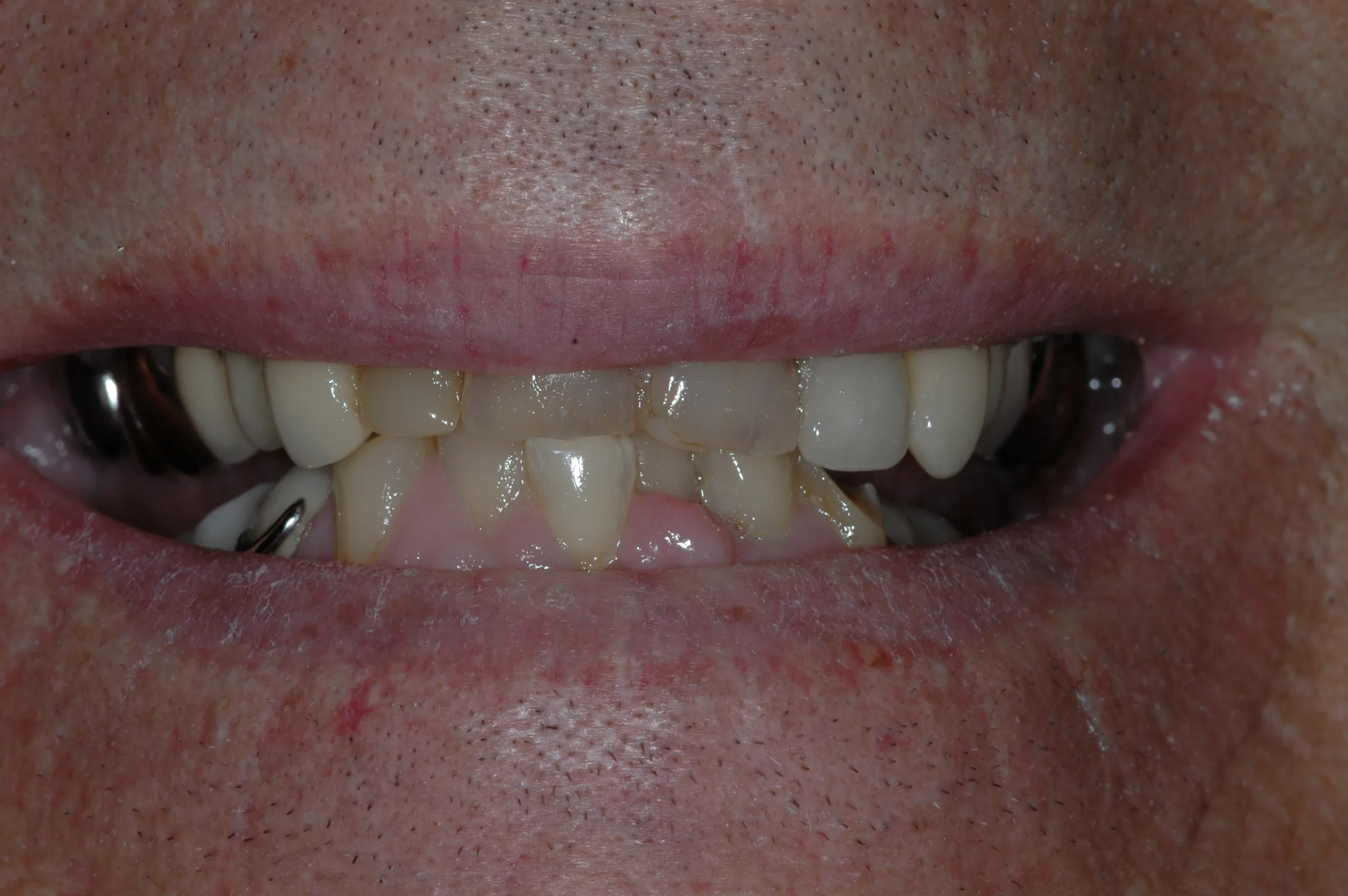
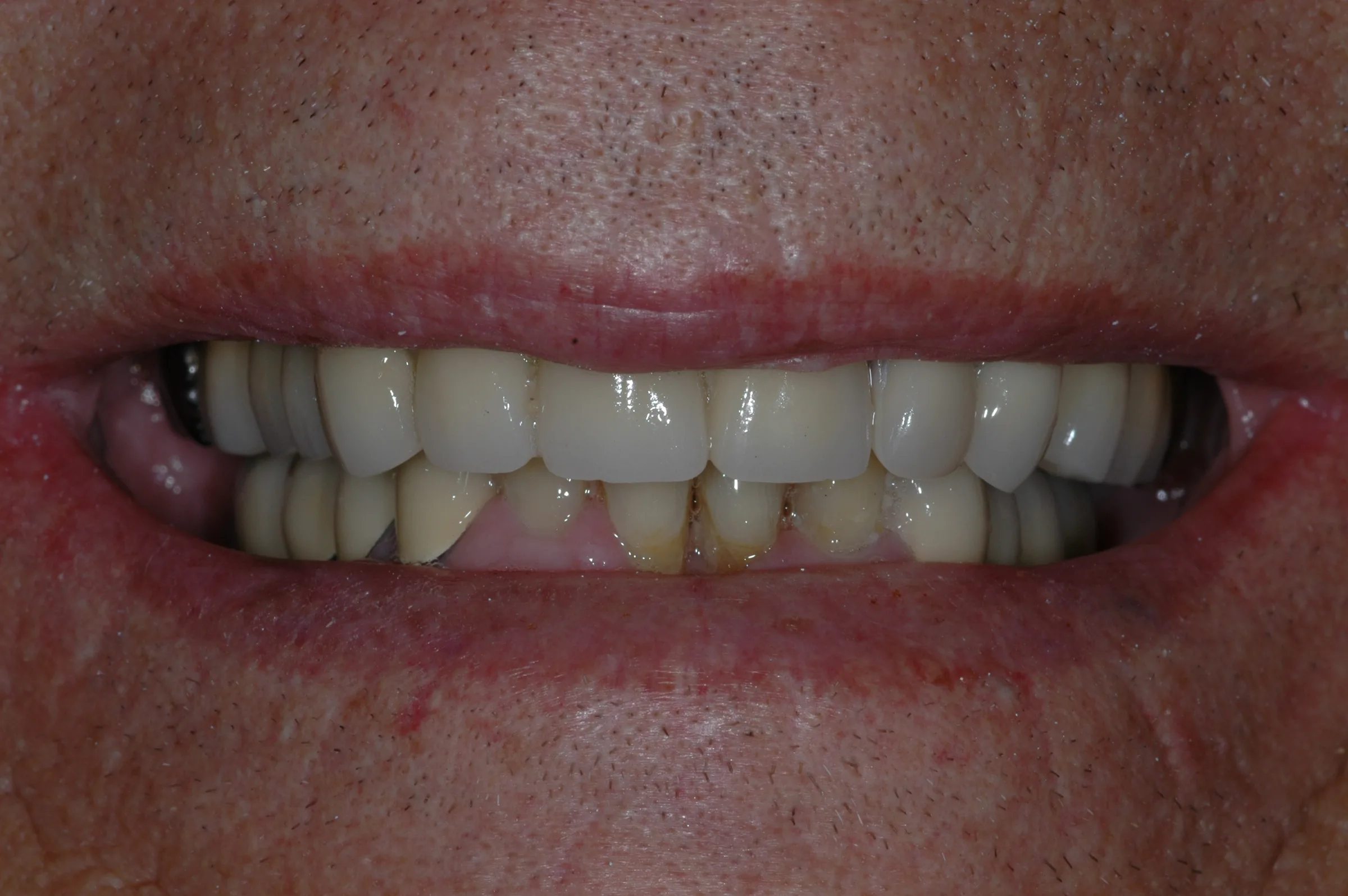
Full Mouth Reconstruction
Damaged teeth from a poor bite scheme. Treated with orthodontics first, followed by full-mouth crowns.
How Bite Reconstruction Is Performed
Nothing restorative starts at your first visit. The first phase is gathering the information needed to plan the case correctly:
From there, a diagnostic wax-up drafts the new bite. Why this matters: in most cases the goal is to restore the height of your bite that has been lost to wear — clinically called vertical dimension of occlusion (VDO). We design exactly how much height to restore and how the teeth should contact before any of it goes in your mouth.
The wax-up is turned into a removable 3D-printed prototype of your new bite — and you wear it. This is where the new height and the new contact pattern get confirmed in your own mouth, in your own life: chewing, speaking, smiling. If a contact feels heavy, if a sound in speech needs refining, if the look needs a tweak, we adjust the prototype before any of it becomes permanent. Per the practice's stated philosophy: "Nothing definitive goes in the mouth until the patient has lived with and approved the design."
Once you've confirmed the prototype design, the final restorations are made to that same plan. Dr. Andrus does the wax-up, simulation, and prototype work himself; the final ceramic restorations are fabricated by experienced lab technicians on modern CAD-CAM equipment. Materials are chosen per case — zirconia where strength matters most, lithium disilicate (e.max) where lifelike appearance is the priority, or layered porcelain where a hybrid makes sense. Final cementation is followed by a T-Scan bite check and any small fine-tuning needed. From there, the case enters long-term care.
Materials & Technology
Preparation & Sedation
Your first appointment is a comprehensive consultation. We review your medical and dental history, take full-arch imaging, chart your gums, analyze your bite, and talk through what you want out of the case. No restorative work is started at the first visit. The point is for both of us to understand the case before any decisions are made.
For longer restorative visits, we offer:
For patients with significant dental anxiety, we also walk through the visit step-by-step beforehand — so the experience feels predictable rather than overwhelming.
What Sets Dr. Andrus Apart on Bite Cases
Dr. Andrus has published peer research on computer-aided bite adjustment and uses T-Scan digital bite analysis routinely in complex reconstruction cases. Few prosthodontists have the same depth of academic engagement with this specific procedure — which matters when your case has been turned away or oversimplified elsewhere.
“We always start with a diagnostic wax-up and provisional prototype to test our concept. Nothing definitive goes in the mouth until the patient has lived with and approved the design.” That is the practice's philosophy, verbatim. You wear a removable version of the new bite for several weeks before any of it becomes permanent — so you confirm the comfort, the function, and the look first.
Bite reconstruction can mean longer-than-usual appointments. We offer IV sedation for the long surgical phases, oral sedation for long restorative visits, and the option to break treatment into shorter sessions when that's a better fit. For patients with significant anxiety, we walk through the plan step-by-step before any sedation begins, so the visit feels predictable rather than overwhelming.
Follow-Up & Long-Term Care
Most patients come back for short bite-check visits at one week, one month, and three months after the final restorations are placed. Why this matters: in the first ninety days your jaw muscles adapt to the new bite height, and small adjustments are common as that adaptation happens. We repeat the T-Scan analysis at the three-month visit to confirm your bite is loading the way it was designed to.
From there, you're on a normal recall schedule — every three to six months for hygiene, a quick bite check, and a look at your night guard. A custom night guard is part of long-term protection for nearly every reconstruction patient: the grinding that contributed to the original wear usually hasn't gone anywhere, and the night guard keeps it from damaging your new restorations. With consistent night-guard wear and routine recall, well-executed full-mouth reconstruction work commonly lasts fifteen years or more.
Patients who travel in from outside St. George can have their cleanings and routine care coordinated with their dentist back home; the bite-related side of the case stays with the practice that designed it.
Documented Cases
Real before-and-after cases from Dr. Andrus, with treatment notes — many patients find it useful to see the kind of work this is, on people whose starting points may look like theirs:
Dr. Andrus Answers
It means rebuilding the way your upper and lower teeth come together — not one tooth at a time, but as a coordinated set. Dentists also call this full-mouth occlusal rehabilitation. The whole bite gets restored to a stable height and a balanced contact pattern, usually using crowns, onlays, or implant-supported restorations across multiple teeth in both arches. The work is planned around what the final bite needs to look and feel like, not around what each individual tooth happens to need today.
Most candidates fall into one of these patterns: severely worn-down teeth from years of grinding (bruxism), wear, or acid erosion; a bite that has collapsed from long-term tooth loss without replacement; a jaw that hurts or feels unstable in ways tied to the bite itself; or a mouth full of older crowns and bridges that are failing one piece at a time. If patching individual teeth has stopped solving the problem, that is usually the signal it's time to look at the whole bite.
Most cases run between four and twelve months — longer if your case also needs implants, extractions, or orthodontic alignment first. The diagnostic phase is typically two to four visits before any restorative work begins. After that, you wear a removable prototype of your new bite for several weeks to several months. Only once you've confirmed it feels right do the final restorations get made.
A cone beam CT scan (CBCT) for a 3D view of your jaw, teeth, and joints. A Medit intraoral scanner for digital impressions — no goopy trays. T-Scan digital bite analysis to map where your teeth are hitting too hard or too lightly, which traditional bite paper cannot fully show. A facebow and articulator to physically simulate how your jaw moves, so the new bite can be designed before anything in your mouth changes. Icam Photogrammetry for full-arch implant cases. Einstein 3D printers with Flexera resin to make the prototypes you'll wear during testing.
Yes — that's the point. We're changing the bite, usually by restoring height that's been lost to wear and redistributing pressure to the teeth that can handle it. The prototype phase exists exactly so you can adapt to and confirm the new feel while everything is still adjustable. If something feels off, we change it before any of it becomes permanent.
No. A cosmetic smile makeover focuses on how your front teeth look. Bite reconstruction is a functional procedure — it fixes how all your teeth work together when you chew, speak, and rest. The smile improvement is real, but it's a side effect of getting the bite right, not the main goal.
Cost depends on the scope — a 12-tooth case is very different from a 28-tooth case, and any extractions, implants, or orthodontic work add to the total. After the diagnostic workup we give you a written plan with the full number before you commit to anything. Financing is available through Mountain America Credit Union, CareCredit®, and Proceed Finance.
We offer both surgical and effective non-surgical options — not a one-size-fits-all approach.
Worn Teeth, Failing Crowns, or a Bite That Doesn't Feel Right?
See whether full-mouth reconstruction is the right answer — or whether something narrower will do.