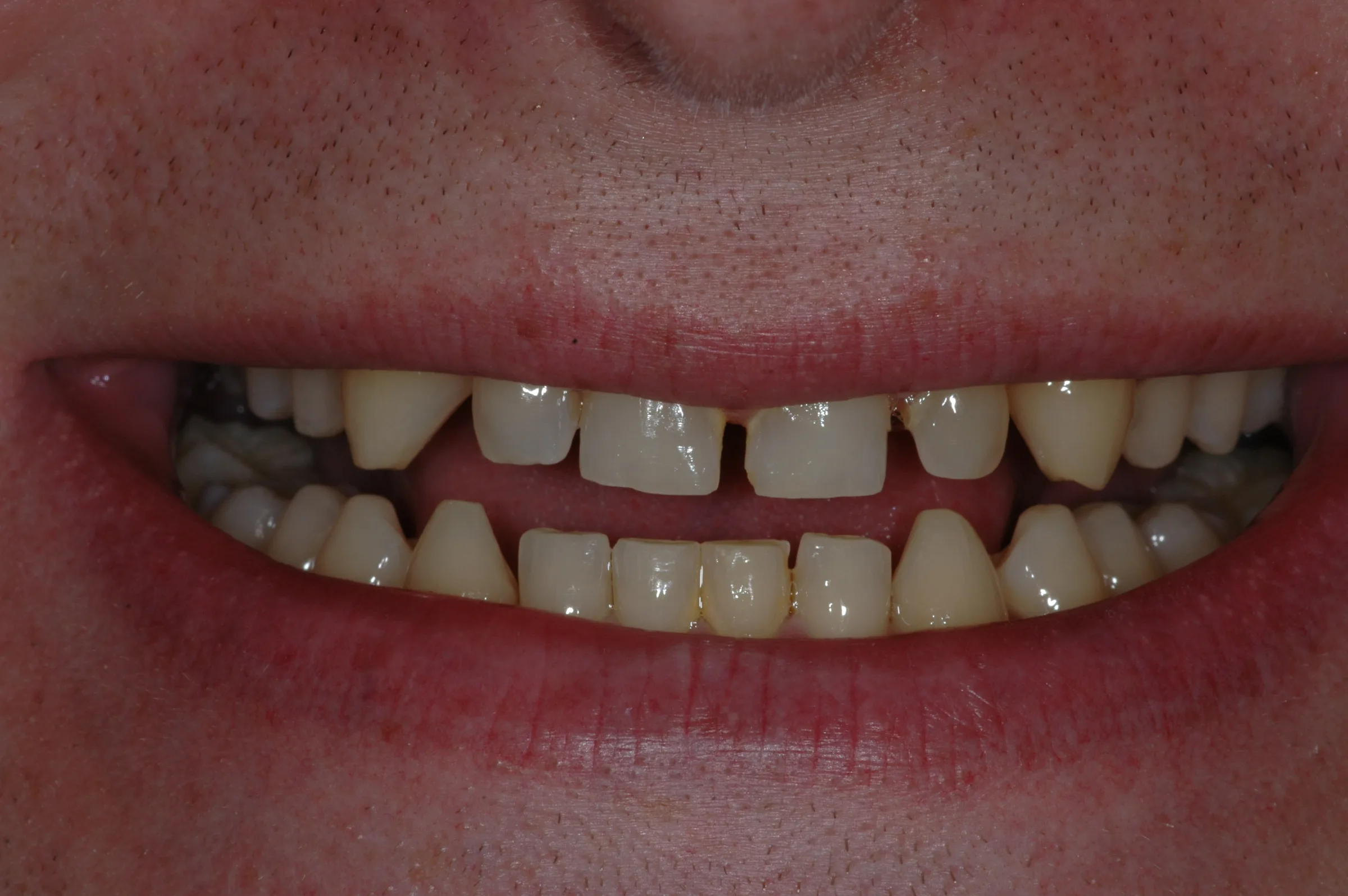
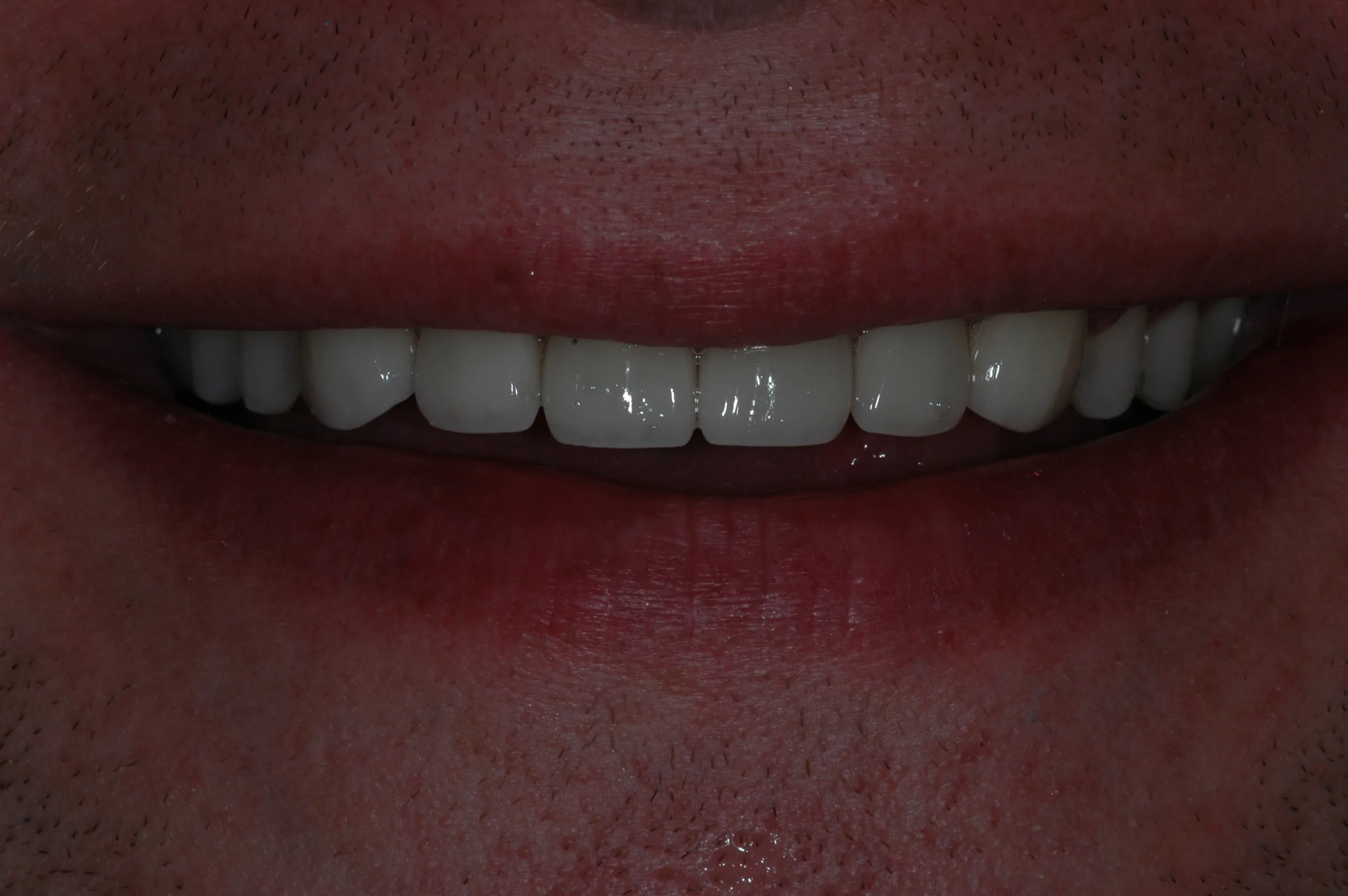
Cosmetic Zirconia Crowns
Patient was unhappy with gaps in his front teeth. Zirconia crowns closed the gaps and restored a balanced smile.


Permanent Restorations — Crowns, Bridges & Fixed Implant Work
Restorations that stay in your mouth, function like your own teeth, and are designed by a Board-Certified Prosthodontist with two decades of fixed-restoration experience.
You'll approve the color, shape, and arrangement of your new restorations before any final work is made — so the result matches what you actually want.
Permanent, Not Removable
If you have a tooth that's fractured, heavily decayed, or has had a root canal — or if you're missing one or more teeth and don't want something you take out at night — the answer is a fixed restoration: a crown, a bridge, or an implant-supported restoration that stays in your mouth permanently.
Many patients reach this point after years of "I'll just live with it" — a tooth that's been chipping a little more each year, a crown placed twenty years ago with a dark line at the gum, a bridge that finally failed, or a missing tooth they worked around until they couldn't anymore. What this means: when patching with fillings stops being enough, fixed prosthodontics is the next step — and what gets chosen depends on what's still there to work with.
Fixed prosthodontics is the dental specialty's name for permanent restorations. Crowns cap a tooth that's still in your mouth. Bridges replace a missing tooth using the neighbors as anchors. Implant-supported restorations replace missing teeth without involving the neighboring teeth at all. The right answer for you depends on what's going on with the rest of your mouth, your bite, your bone, and what you want long-term.
Real Fixed-Restoration Cases
Three cases from the practice's smile gallery showing the breadth of fixed prosthodontics — cosmetic crowns, e.max + veneers, and a fixed implant-supported restoration after tooth loss. Click any pair to view full-size.
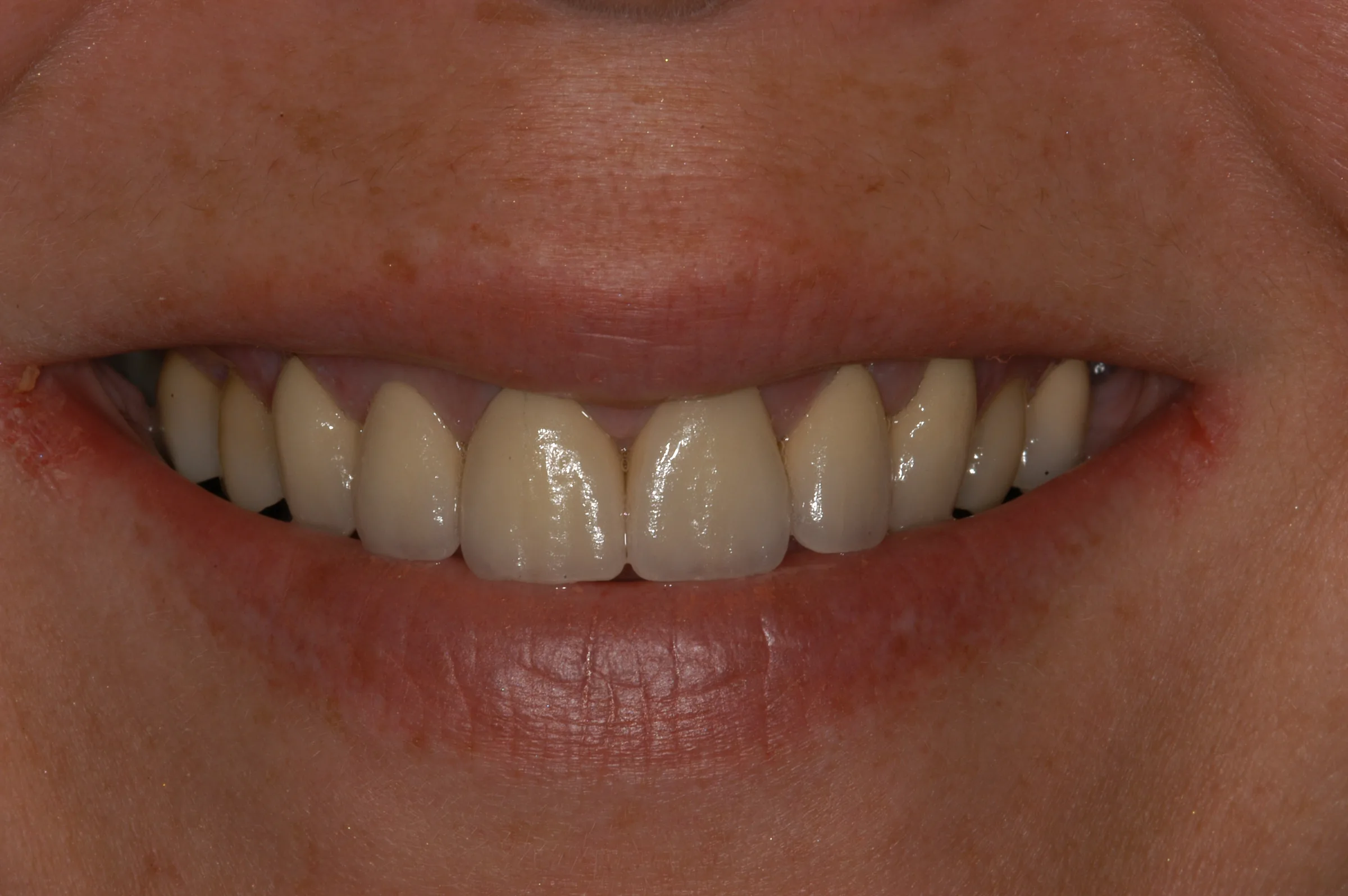
Cosmetic Zirconia Crowns
Patient was unhappy with gaps in his front teeth. Zirconia crowns closed the gaps and restored a balanced smile.
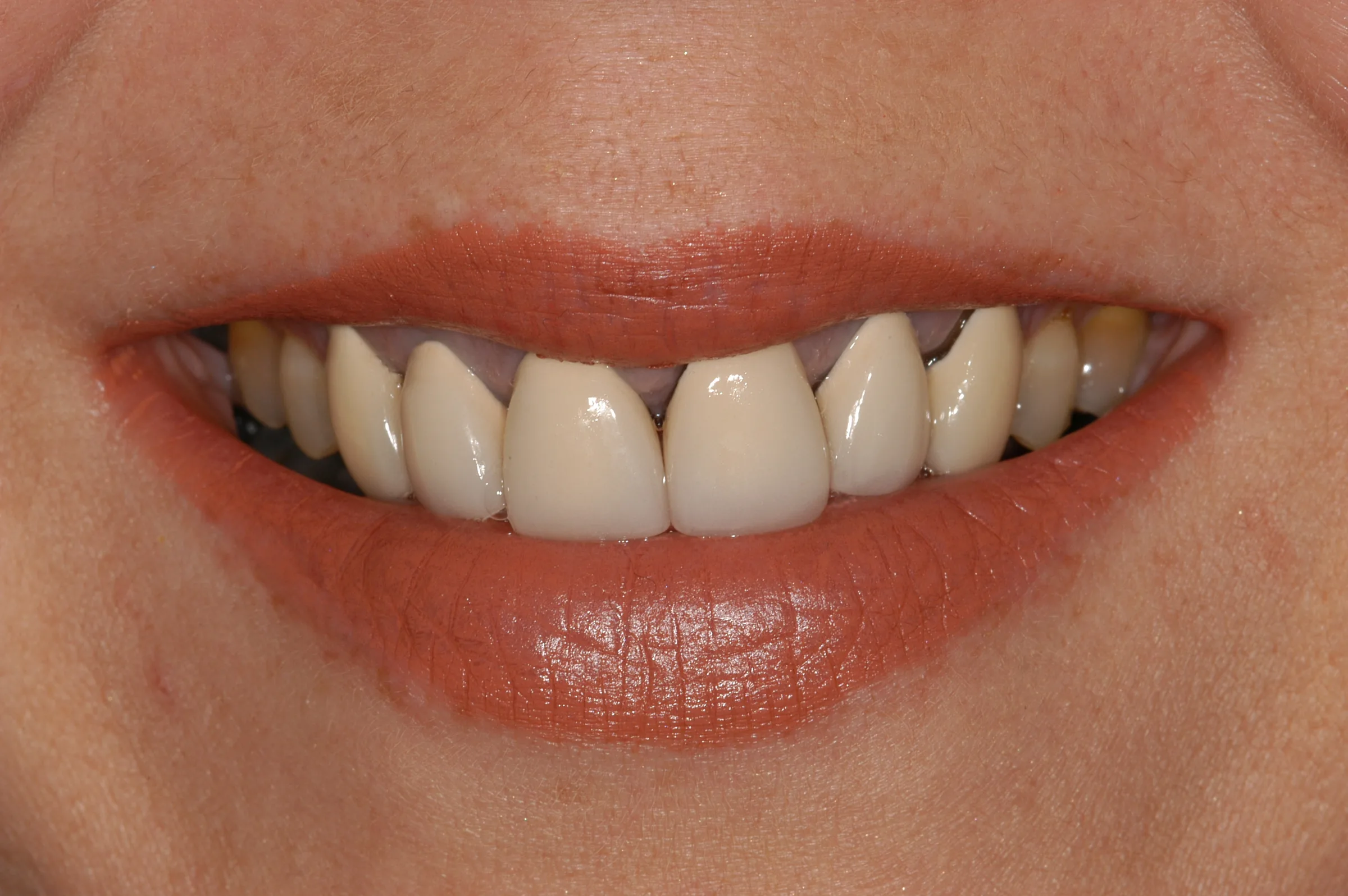
e.max Crowns & Veneers
Patient was unhappy with old crowns showing dark margins at the gum line. Replaced with new e.max (lithium disilicate) crowns and veneers.
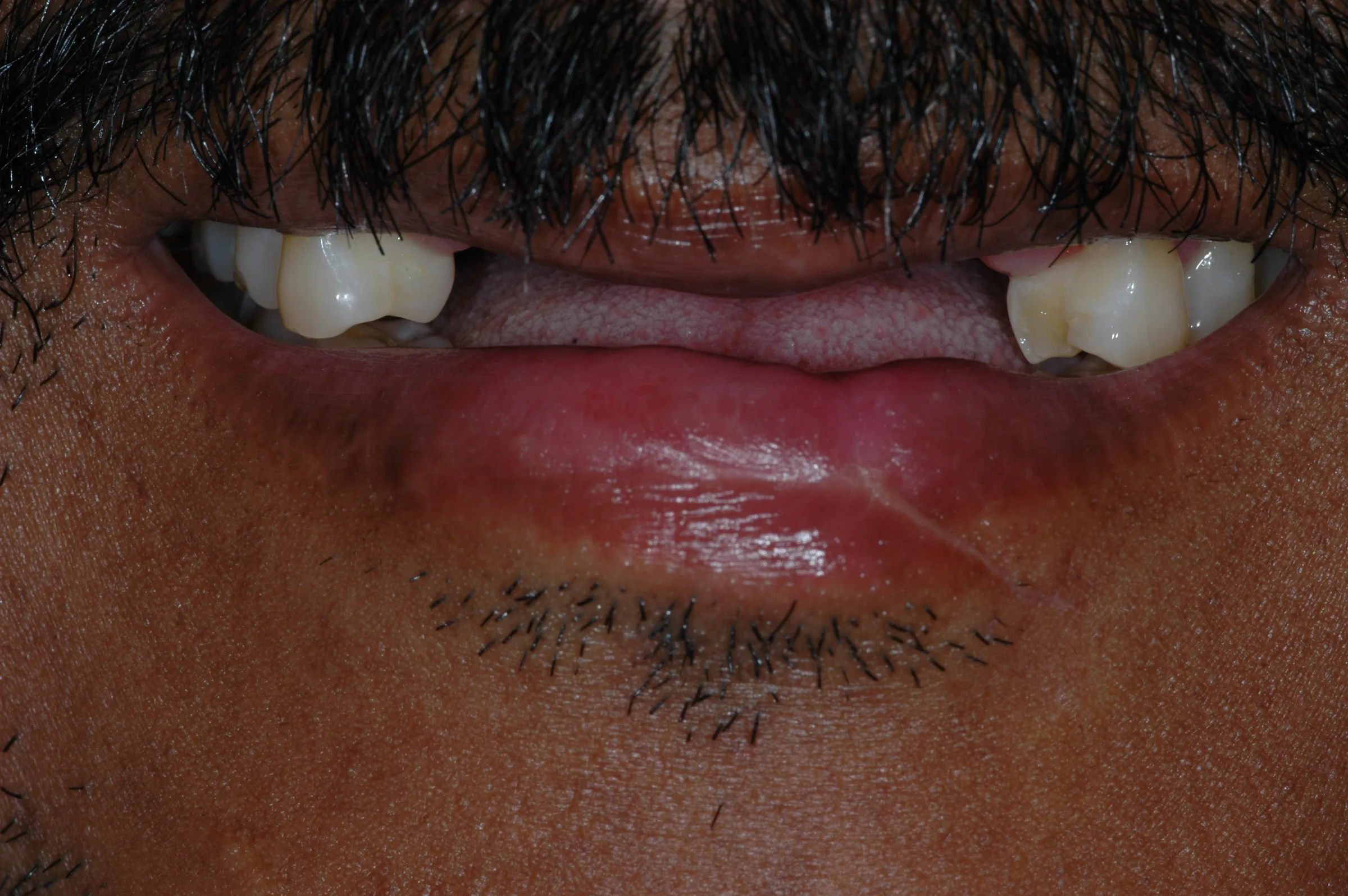
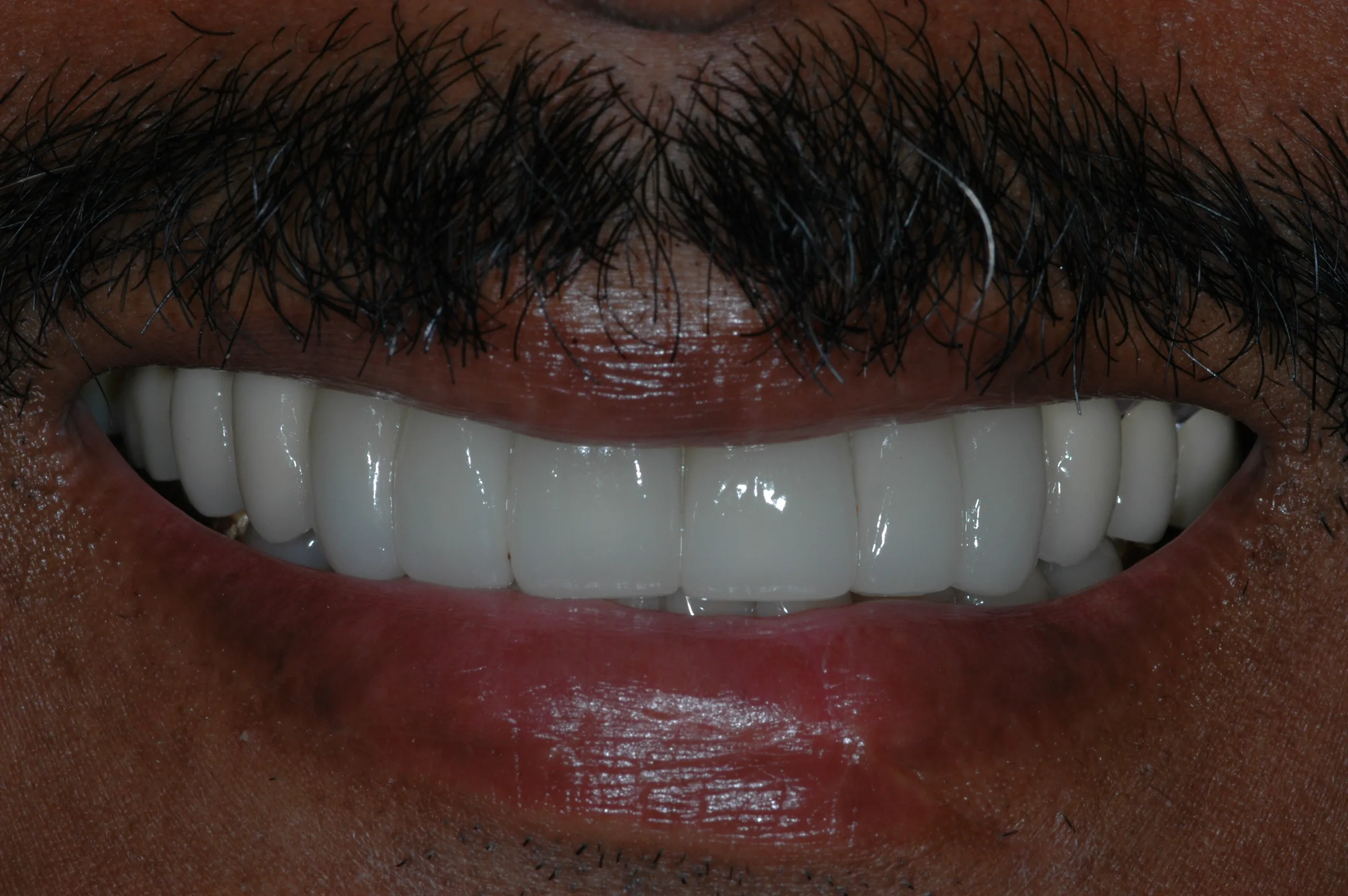
Fixed Implant Prosthesis
Patient lost teeth in an accident. Replaced with a zirconia FP1 implant-supported fixed prosthesis — a permanent, lifelike restoration without involving the neighboring teeth.
Fixed Restorative Options
Dr. Andrus provides several types of fixed restorative treatment — from single crowns to full-arch implant rehabilitation — depending on the complexity of the case and the condition of the teeth and supporting structures.
Fixed prosthodontics is not a single procedure, but a category of restorations used to rebuild damaged, failing, and missing teeth. Treatment may involve single crowns, bridges, implant-supported restorations, veneers, or full-arch rehabilitation — often combined within the same case depending on the condition of the teeth, bite, bone support, and long-term functional goals.
When a tooth is fractured, structurally compromised, severely worn, or treated with root canal therapy, a crown restores strength, function, and protection. Materials such as zirconia, lithium disilicate, and porcelain-fused-to-metal are selected based on the forces involved, esthetic demands, and the location of the tooth within the bite.
When one or more teeth are missing, fixed bridges restore continuity of the bite by spanning the space between supporting teeth or implants. Traditional bridges, cantilever bridges, and Maryland-bonded bridges each serve different clinical situations depending on support, load distribution, and esthetic requirements.
When natural teeth can no longer predictably support restoration, dental implants become the foundation instead. Implant-supported crowns, bridges, and full-arch fixed prostheses allow complex restorative rehabilitation to be anchored directly to the jawbone with long-term stability.
When the underlying tooth structure remains healthy, veneers and conservative cosmetic restorations can improve shape, proportion, symmetry, color, and surface appearance while preserving as much natural tooth structure as possible.
How a Fixed Restoration Case Is Performed
Even single-crown cases start with a proper workup. For larger cases, the first phase gathers the information needed to design the restorations correctly:
From there, a diagnostic wax-up drafts the proposed restorations — the exact shape, color, and position before anything in your mouth is touched.
For larger cases, the wax-up is converted into a 3D-printed provisional prototype that you wear — chewing, speaking, smiling. Why this matters: if a contact feels heavy, if a sound in speech needs refining, if the look of a front tooth needs a tweak, we adjust the prototype before any of it is permanent. Per the practice's stated philosophy: "Nothing definitive goes in the mouth until the patient has lived with and approved the design." For single-crown cases the provisional is more straightforward — a same-day temporary that protects the tooth until the final crown is ready.
Once the prototype design is approved (or, for single crowns, the temporary phase is complete), the final restorations are made. Dr. Andrus does the wax-up, simulation, and prototype work himself; the final ceramic restorations are typically fabricated by experienced lab technicians using methods chosen for the case — usually milled from a solid ceramic block, sometimes pressed, occasionally 3D-printed. Material is chosen per tooth: zirconia where strength is the priority, lithium disilicate (e.max) where lifelike appearance matters most, or porcelain-fused-to-metal where a hybrid is right. Final cementation is followed by a T-Scan bite check and any small fine-tuning.

Materials & Technology
Preparation & Sedation
Your first appointment is a comprehensive consultation: medical and dental history, imaging where needed, periodontal charting, bite analysis, and a discussion of what you want from the case. No restorative work is started at the first visit.
For longer or more complex cases, sedation options include:
For patients with significant dental anxiety, we walk through the visit step-by-step beforehand — so the experience feels predictable rather than overwhelming.
What Sets Dr. Andrus Apart
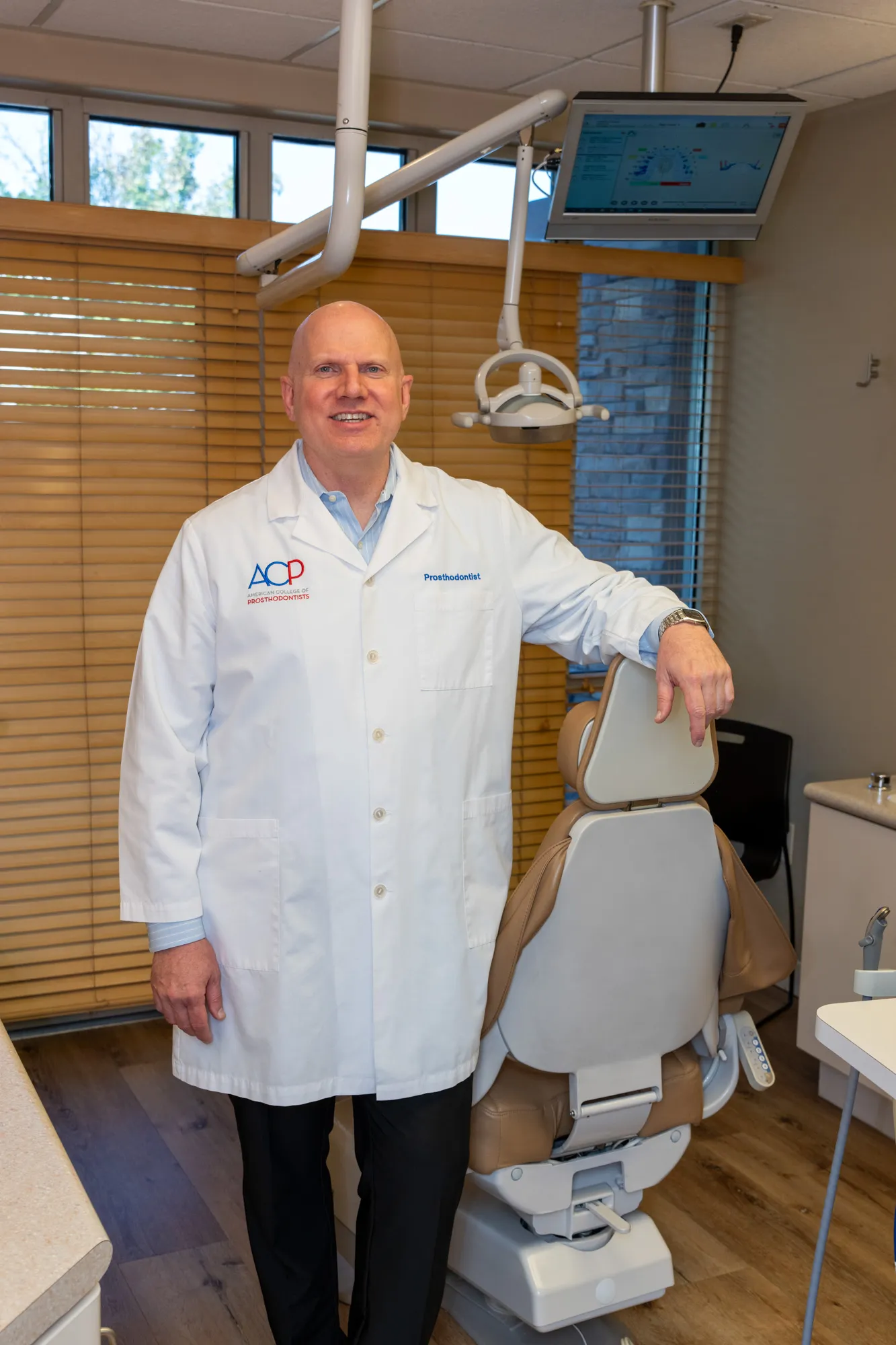
Prosthodontics is the dental specialty dedicated to restoring and replacing teeth — and fixed prosthodontics (crowns, bridges, fixed implant work) is a core part of that specialty's training. Dr. Andrus is a Diplomate of the American Board of Prosthodontics and a Fellow of the American College of Prosthodontists. For complex cases, a specialist is the right place to start, not the second opinion.
“We always start with a diagnostic wax-up and provisional prototype to test our concept. Nothing definitive goes in the mouth until the patient has lived with and approved the design.” For larger cases, you wear a removable version of your new crowns or bridge before any of it becomes final — so you confirm the comfort, the look, and the function first.
Dr. Andrus has published peer work on implant superstructures for the completely edentulous (Journal of Dental Technology, 2011) — the engineering of full-arch fixed restorations supported by implants. That depth shows up most in the cases where standard fixed-prosthodontics protocols don't quite fit.
Follow-Up & Long-Term Care
After the final restorations are placed, you're on a normal recall schedule — every three to six months for hygiene, a quick bite check, and a look at any night guard. Crowns, bridges, and fixed implant restorations are all brushed and flossed like natural teeth, with the only difference being that bridges and implant restorations may need a floss threader or water flosser to clean under the connector.
For patients who grind, a custom night guard is the single biggest step you can take to extend the life of your restorations — the grinding that wore your original teeth doesn't disappear after restoration, and the night guard keeps it from cracking your new ceramics.
Patients who travel in from outside St. George can have their hygiene and routine care coordinated with their dentist back home; the prosthodontic side of the case stays with the practice that designed it.
Dr. Andrus Answers
"Fixed" means the restoration stays in your mouth permanently. You don't take it out at night, and it works just like a natural tooth — you brush, floss, and chew normally. Crowns, bridges, and implant-supported fixed restorations all fall under fixed prosthodontics. "Removable" means dentures or partial dentures that you take out for cleaning. Many patients are candidates for both — fixed gives the closest feel to natural teeth, while removable can be more economical and less invasive.
A crown is for restoring an existing tooth that's still in your mouth but compromised — fractured, heavily decayed, or after a root canal. A bridge replaces a missing tooth by anchoring to the teeth on either side, which works when those neighboring teeth are already restored or strong enough to support it. An implant replaces a missing tooth without involving the neighboring teeth at all — the implant itself becomes the new "root" and a crown attaches to it. The right choice depends on what's going on with the surrounding teeth, your bone, your bite, and what you want long-term.
With good care, modern zirconia and lithium disilicate (e.max) crowns commonly last fifteen to twenty-five years. Bridges typically last ten to fifteen years, with the limiting factor usually being the supporting teeth rather than the bridge itself. Implant-supported fixed restorations have the longest track record — the implant itself can last a lifetime, with the crown on top eventually needing replacement after fifteen to twenty years. Night-guard wear (if you grind) and consistent recall significantly extend all of these.
For straightforward single-crown work, a general dentist is often the right answer. A prosthodontist becomes the right call when the case is complex — multiple teeth at once, a failing bite, mixed implants and natural teeth, an old reconstruction that's failing, or front-tooth esthetics where the result has to look exactly right. Three years of full-time specialty residency after dental school is specifically training for those situations.
Zirconia for cases where strength matters most — back teeth, full-arch reconstructions, patients who grind. Lithium disilicate (e.max) for front teeth where lifelike appearance is the priority. Porcelain-fused-to-metal where a hybrid of strength and appearance is the right balance. The material is chosen per tooth, not blanket-applied to the whole mouth — that's part of what specialty training is for.
Yes — and that's the goal. Modern fixed restorations are designed to your individual bite using digital scanning and a physical articulator that simulates how your jaw moves. The prototype phase (for larger cases) is exactly where you confirm the new restorations feel right before any of it is permanent. For single crowns, the bite is fine-tuned at the cementation appointment using T-Scan digital bite analysis to make sure the crown isn't hitting too hard.
Single crowns and small bridges fall in a predictable range; multi-unit cases and full-arch fixed implant restorations are highly case-dependent. After the diagnostic workup we provide a written treatment plan with the full cost before any work is started — so you can decide with the actual numbers in front of you. Financing is available through Mountain America Credit Union, CareCredit®, and Proceed Finance.
We offer both surgical and effective non-surgical options — not a one-size-fits-all approach.
A Crown, a Bridge, an Implant Restoration — or All Three?
See what fixed-restoration options fit your case — and which combination is right for the long term.