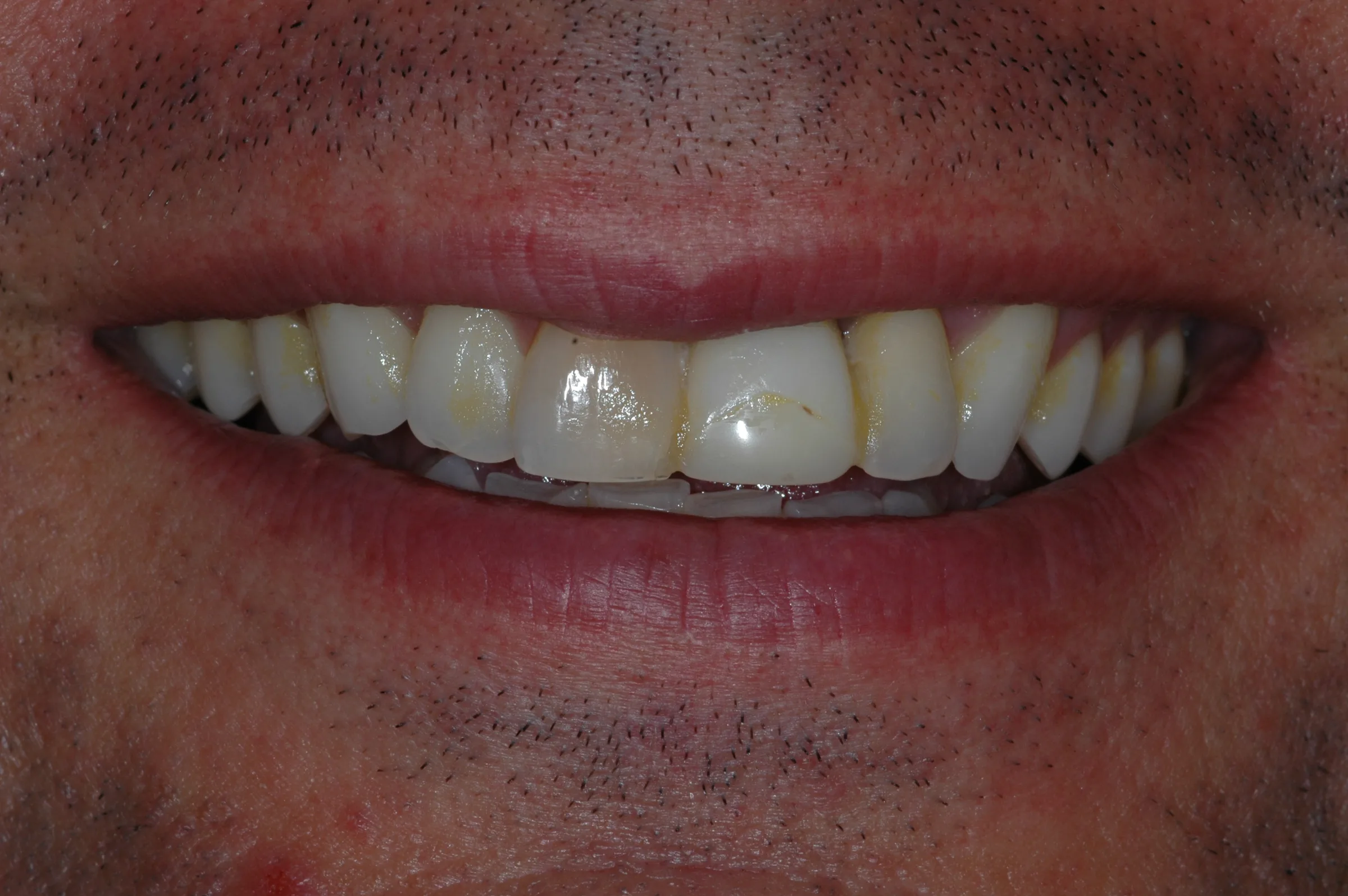
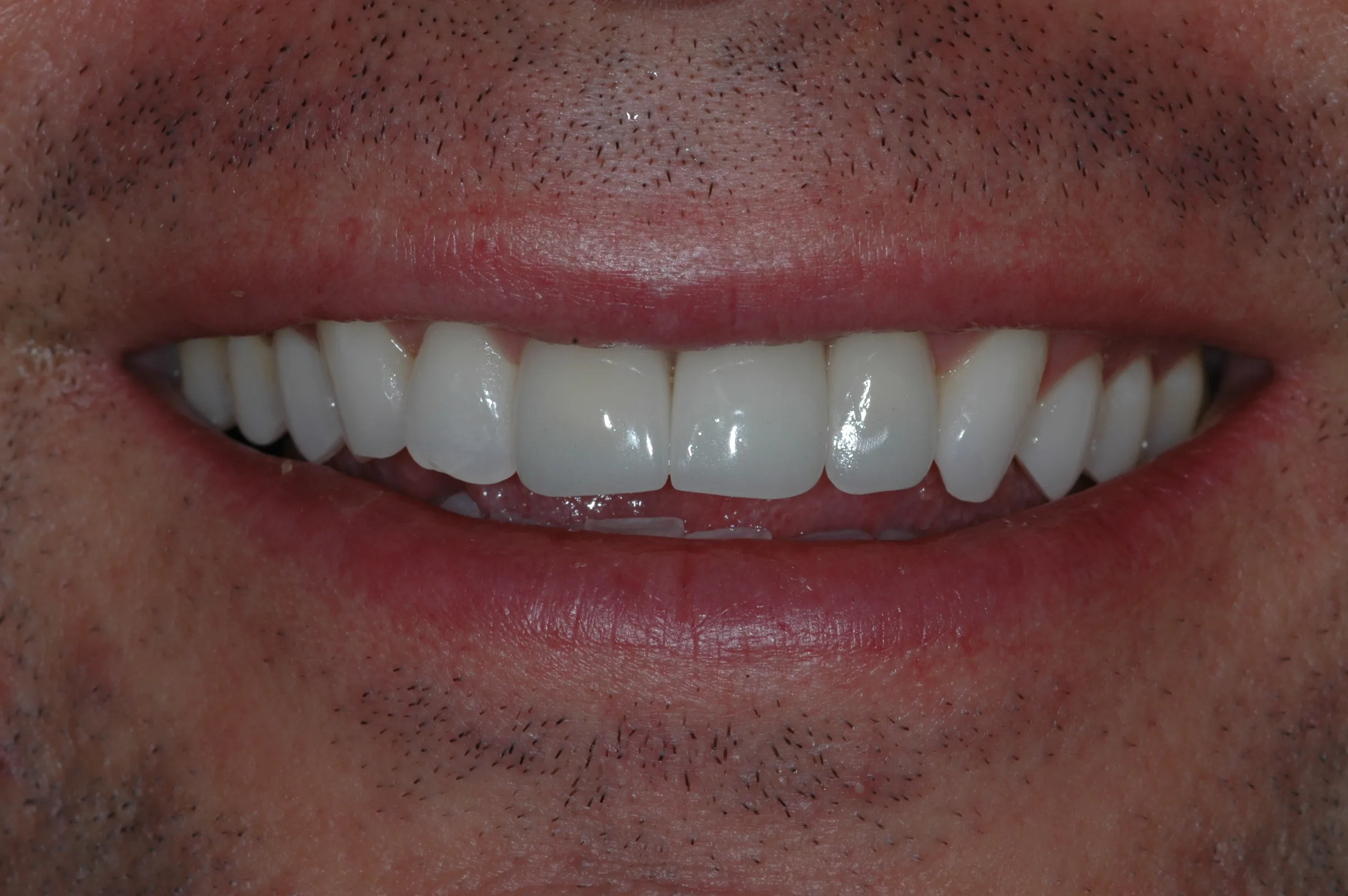
Single-Tooth Front Implant
Patient lost a front tooth in an accident. Replaced with a single dental implant + crown — can you tell which tooth is the implant?


Stable Teeth Replacement With State-of-the-Art Care
Replace missing or broken-down teeth with dental implants by a Board-Certified Prosthodontist who has placed thousands of implants and stays at the forefront of the technology.
When a Tooth Is Missing or Failing
If you've lost a tooth to an accident, infection, or extraction — or if a long-failing tooth has reached the point where it can't be saved — a dental implant replaces the missing root with a small titanium post and a custom crown that looks and functions like the rest of your teeth.
Many patients reach this point after years of trying to save a tooth one filling, root canal, or crown at a time. What this means: when the natural tooth can't be rebuilt, an implant gives you a foundation that stops the cycle — one that can last decades, doesn't decay, and doesn't depend on the neighboring teeth.
Dr. Andrus has placed thousands of implants over twenty-plus years of specialty practice and has published peer research on full-arch implant superstructures. He offers single-tooth implants, multi-tooth implant bridges, and full upper / lower arch implant solutions.
Real Implant Cases
Three implant cases from the practice's smile gallery showing the range — a single front-tooth implant after an accident, a lower full-arch fixed implant prosthesis, and a combined all-on-X plus implant bridges case. Click any pair to view full-size.
Single-Tooth Front Implant
Patient lost a front tooth in an accident. Replaced with a single dental implant + crown — can you tell which tooth is the implant?
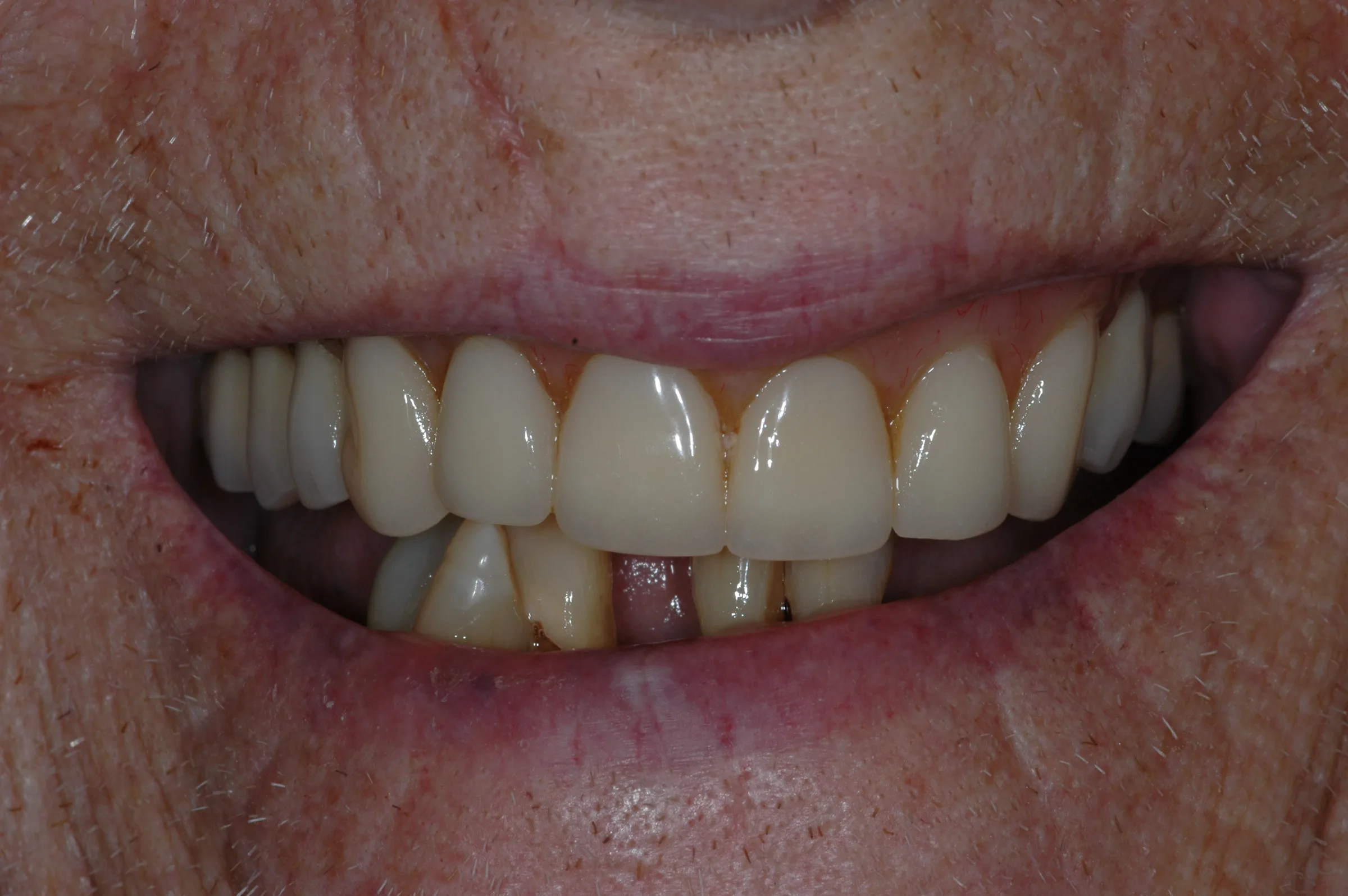
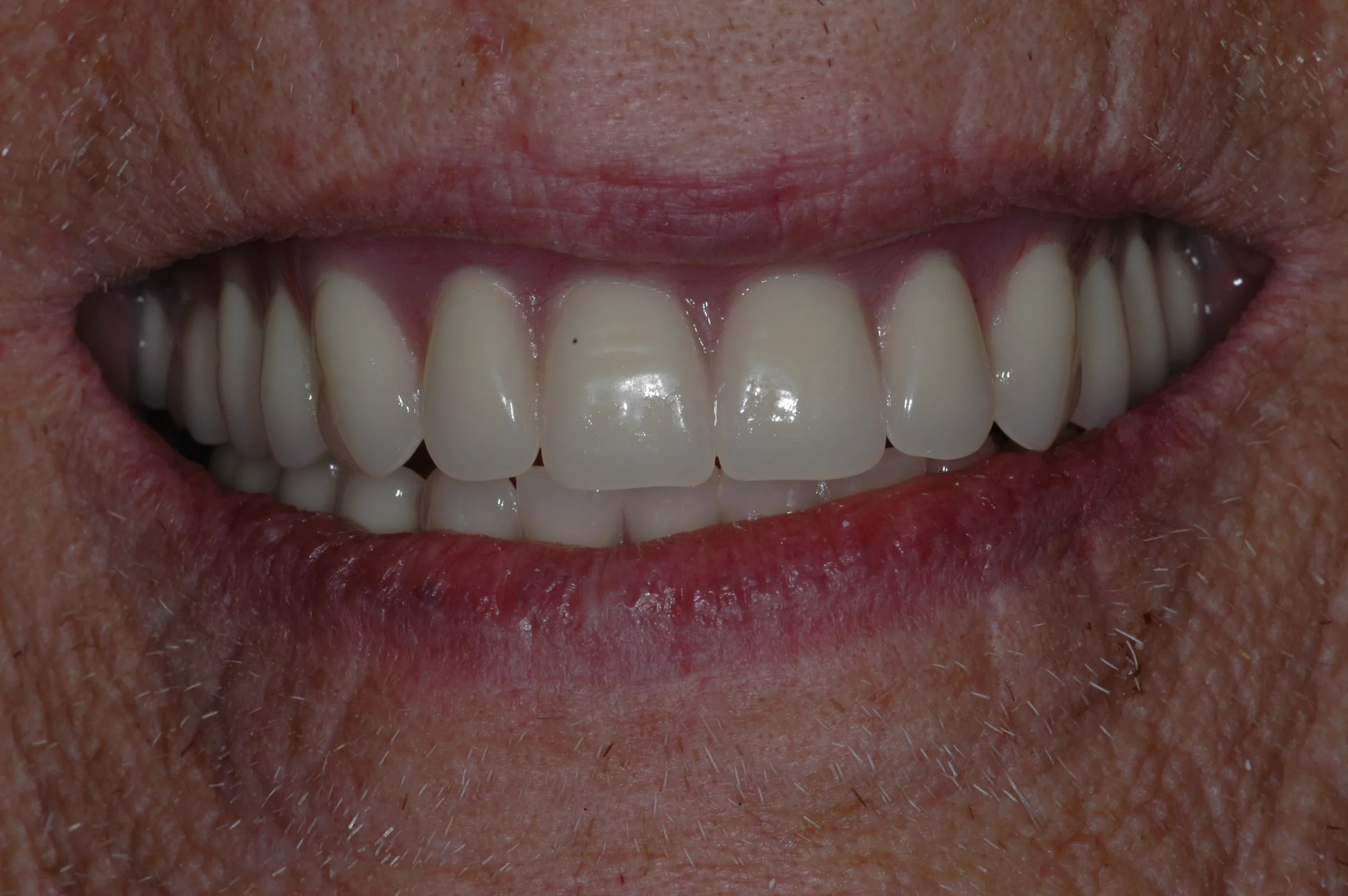
Lower Full-Arch Implant Prosthesis
Patient's failing lower teeth replaced with a fixed-in implant-supported prosthesis. Upper arch restored with a new removable denture in the same plan.
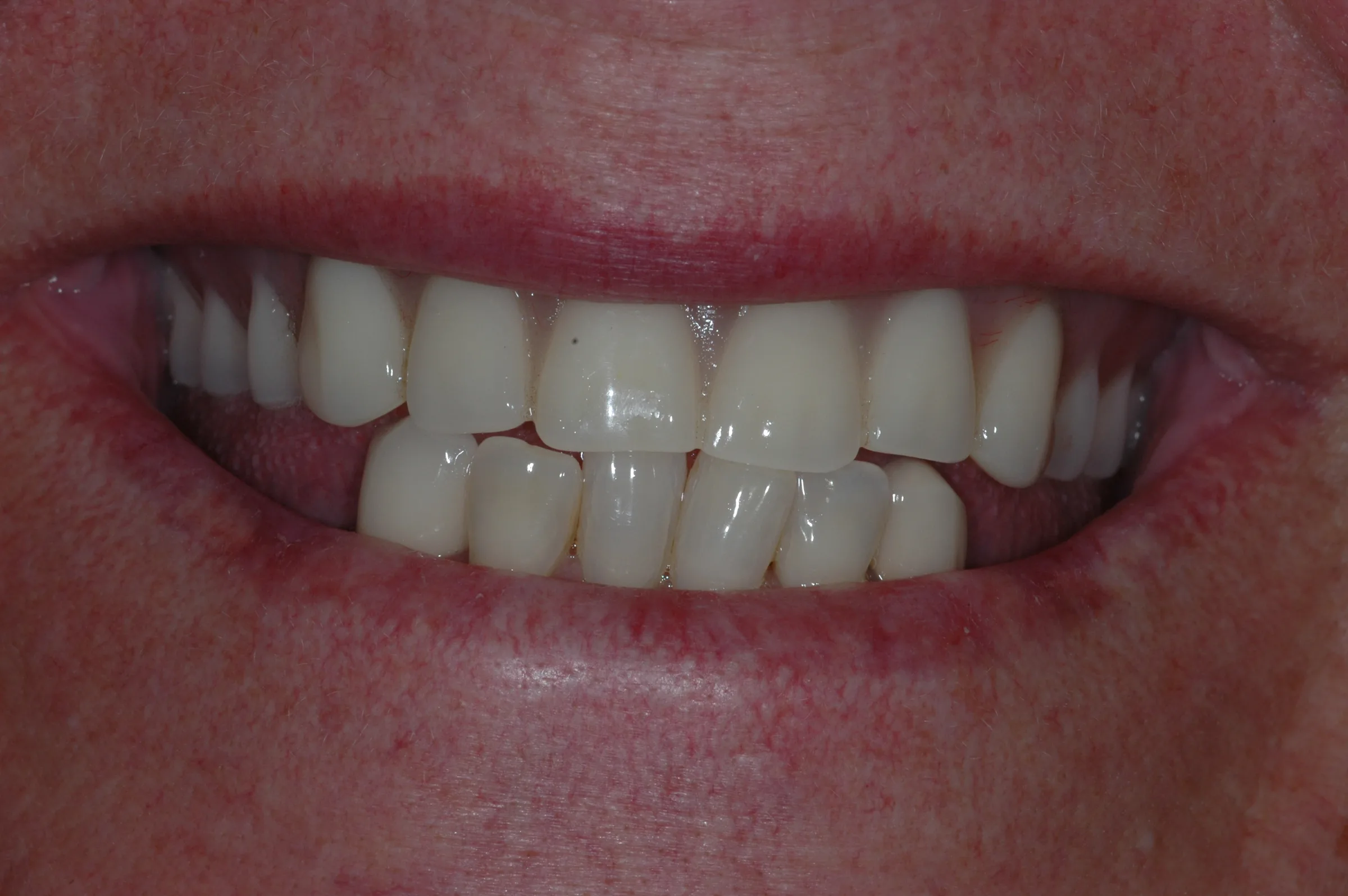
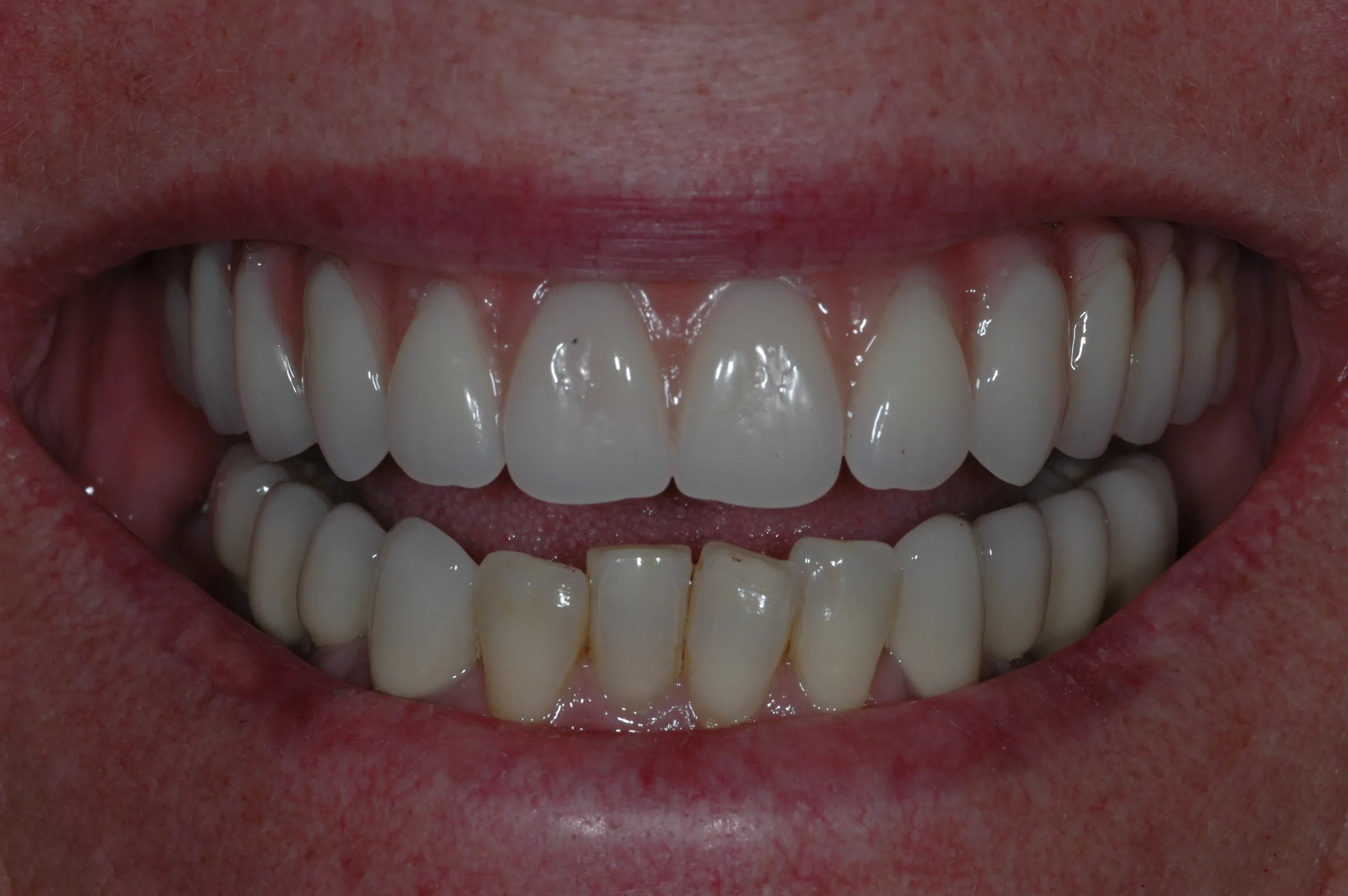
Combined All-on-X + Implant Bridges
Removable upper denture replaced with all-on-X teeth-in-a-day. Lower back teeth restored with implant-supported bridges in a coordinated multi-arch plan.
The Range of Implant Treatment
The right implant solution depends on how many teeth are missing, the condition of the surrounding bone and bite, and the long-term goals for stability, function, and appearance. Treatment may range from a single implant crown to full-arch fixed restoration.
When a tooth is missing, fractured beyond predictable restoration, or no longer maintainable, a single implant can replace that tooth independently without involving neighboring teeth.
When several adjacent teeth are missing, implants can support a fixed bridge that restores multiple teeth without relying on removable partial dentures or preparing healthy neighboring teeth.
When an entire arch requires replacement, strategically placed implants can support a fixed full-arch prosthesis designed to restore stability, bite function, and appearance without traditional removable dentures.
When bone volume, anatomy, health considerations, or financial limitations make full implant reconstruction less appropriate, implant-retained dentures can improve denture stability and reduce movement during eating and speaking.
How an Implant Case Is Performed
Every case starts with a thorough consultation and a 3D workup:
Why this matters: implant position is what determines whether the final crown looks right, fits the bite, and lasts long-term. The planning phase is where that gets decided — not at the surgical appointment.
The implant is placed in a single appointment, typically under local anesthesia (with sedation available for longer or more complex cases). Most single-implant placements take less than an hour. After placement, the implant integrates with the bone over the next three to six months — the period during which the bone grows around the implant and locks it in place. During healing you wear a temporary tooth (or a temporary bridge or denture for multi-tooth cases) so the gap is never visible.
Once integration is complete, the final crown (or bridge or fixed prosthesis) is fabricated and attached to the implant. The new restorations are made from durable, natural-looking materials — zirconia for strength, lithium disilicate (e.max) for lifelike appearance — and they're designed to match your existing teeth in color, shape, and bite. "My on-site dental lab enables me to place the immediate tooth that day," Dr. Andrus says of front-tooth cases — meaning patients don't have to endure a gap in their smile while the permanent crown is being made.
Meticulous, High-Tech Planning
Dr. Andrus does extensive planning using state-of-the-art technology for every case. He begins with a thorough consultation to determine the patient's needs and goals.
A 3D X-ray of the patient's mouth is taken to give Dr. Andrus a detailed 360-degree view of their teeth and jawbone. He uses this data with special 3D software to simulate the implant placement surgery ahead of time. When needed, he creates a custom surgical guide to ensure the implants are placed in the precise locations determined in the software.
Beautiful, Strong New Teeth
The new crowns or other restorations that attach to the implants are made from durable, natural-looking materials such as zirconia. As an expert in the creation of artificial teeth, Dr. Andrus ensures that the restorations fit perfectly, are highly aesthetic, and match the patient's neighboring teeth.
When replacing a front tooth, he can provide and place a temporary crown on the implant the same day, so the patient won't have to endure a gap in their smile while waiting for their permanent crown. "My on-site dental lab enables me to place the immediate tooth that day," he says.
Materials & Technology
Preparation & Sedation
Your first appointment is a comprehensive consultation: medical and dental history, full-arch imaging (often a CBCT), an examination of the existing teeth and tissue, and a long conversation about your goals.
For implant placement appointments, sedation options include:
For patients with significant dental anxiety, we walk through the visit step-by-step beforehand — so the experience feels predictable rather than overwhelming.
What Sets Dr. Andrus Apart
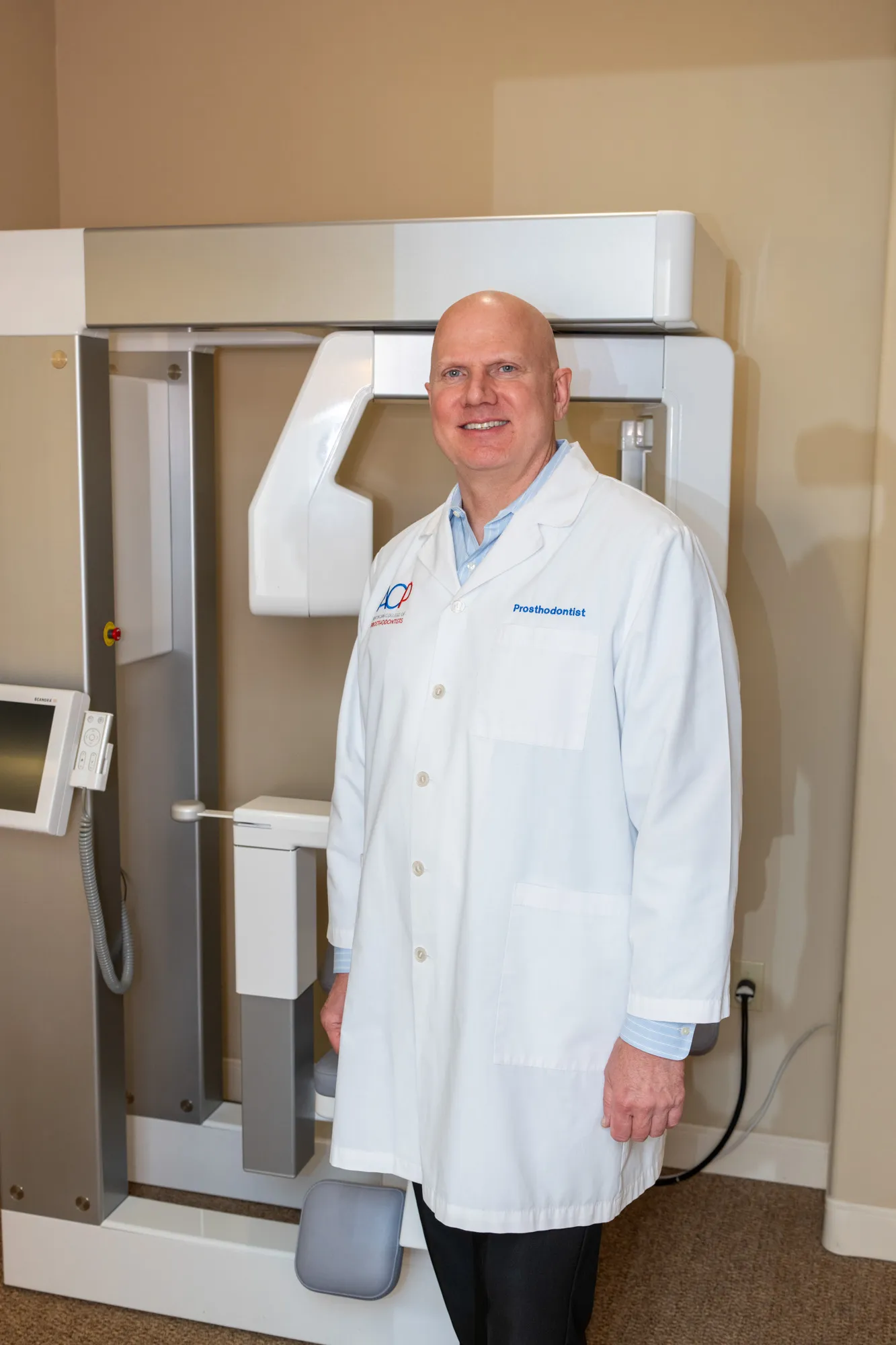
A board-certified prosthodontist, Dr. Andrus has specialist training and expert skills in both dental implant treatment and designing custom restorations. His office is equipped with advanced implant technology for maximum efficiency and accurate results.
Dr. Andrus listens to his patients, makes sure they know all their options — with and without implants — and includes them in making decisions about their treatment. He also welcomes his patients' input into the design of their custom replacement teeth, so the new smile looks just the way they want it to.
Dr. Andrus and his staff are gentle and reassuring. They take the time to engage with their patients and help them feel calm and relaxed. To ensure patients are comfortable throughout treatment, the practice offers a variety of sedation options.

“Dr. Andrus did a phenomenal job with my implant and crowns. Now, I can eat anything with confidence, and my smile has never looked better.”
Follow-Up & Long-Term Outcomes
After the implant is placed, you'll come back for short check-up visits during the integration period to make sure the bone is healing correctly around the implant. Once the final crown is cemented, you're on a normal recall schedule — every six months for hygiene and a check of the implant, the surrounding gum tissue, and the crown itself.
Implants are brushed and flossed like natural teeth. Multi-tooth bridges and full-arch prostheses may need a floss threader or water flosser to clean under the connector — we walk you through the technique at the delivery appointment.
With consistent home care and routine recall, the implant itself can last a lifetime. The crown that attaches to the implant typically lasts fifteen to twenty-five years before needing replacement. Patients who grind benefit from a custom night guard to protect the ceramic from cracking. Patients who travel in from outside St. George can have routine hygiene coordinated with their dentist back home.
Dr. Andrus Answers
A dental implant is a small titanium post that replaces the root of a missing tooth. It's placed into the jawbone where it integrates with the bone over a few months — a process called osseointegration. Once integrated, a custom crown (or bridge or denture, depending on the case) attaches to the implant and replaces what's visible above the gum. The result functions like a natural tooth: you brush, floss, chew, and live with it the same way.
Most patients with adequate jawbone are candidates. The diagnostic workup checks bone height, bone width, gum health, and the position of nerves and the sinuses — all factors in implant placement. Patients with limited bone may need bone grafting first, or may be better candidates for mini implants or implant-retained dentures. Patients with active gum disease, uncontrolled diabetes, or who use heavy tobacco may need to address those first. The consultation answers the candidacy question definitively.
Most single-tooth implant cases run three to six months from extraction (if needed) to final crown — most of that time is the healing phase while the implant integrates with the bone. Multi-tooth cases run similar timelines. Full-arch cases can be longer (six to twelve months) when extractions and grafting are part of the plan, OR shorter (same-day teeth) when the bone allows for an immediate-load prosthesis.
We pride ourselves on our friendly approach and making sure you feel comfortable during your treatment. If you need it, we also offer sedation. Many of my patients are surprised by how little discomfort they feel during and after getting an implant, and some can return to work and their normal activities the next day.
Implant-supported teeth can be brushed and flossed similarly to your natural teeth. With the right care, they can last over 40 years.
Most modern implant crowns are zirconia or lithium disilicate (e.max). Zirconia for back teeth where strength matters most; e.max for front teeth where lifelike appearance is the priority. Both look natural and hold their color over time. The material is chosen per tooth, not blanket-applied.
We offer affordable financing options through Mountain America Credit Union, CareCredit® and Proceed Finance.
We ask that you pay our fees on the day of service, and we'll submit your forms to the insurance company for you. If you're covered, your insurance will reimburse you directly. In some cases, we can also submit claims to your medical insurance for dental treatments that are medically necessary.
We offer both surgical and effective non-surgical options — not a one-size-fits-all approach.
Not Sure What To Do About Broken-Down or Missing Teeth?
Learn how Dr. Andrus can restore your smile with dental implant treatment.