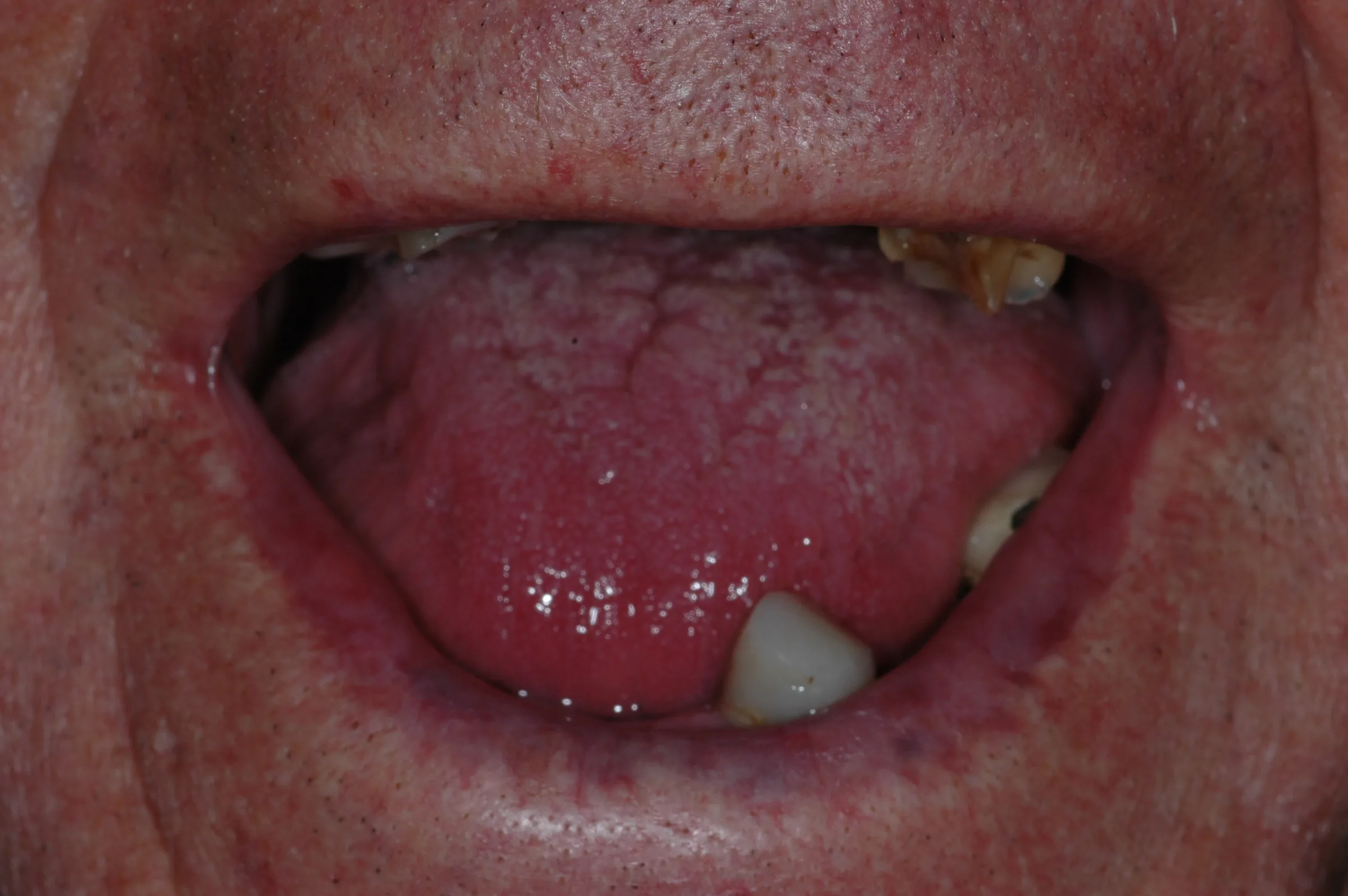
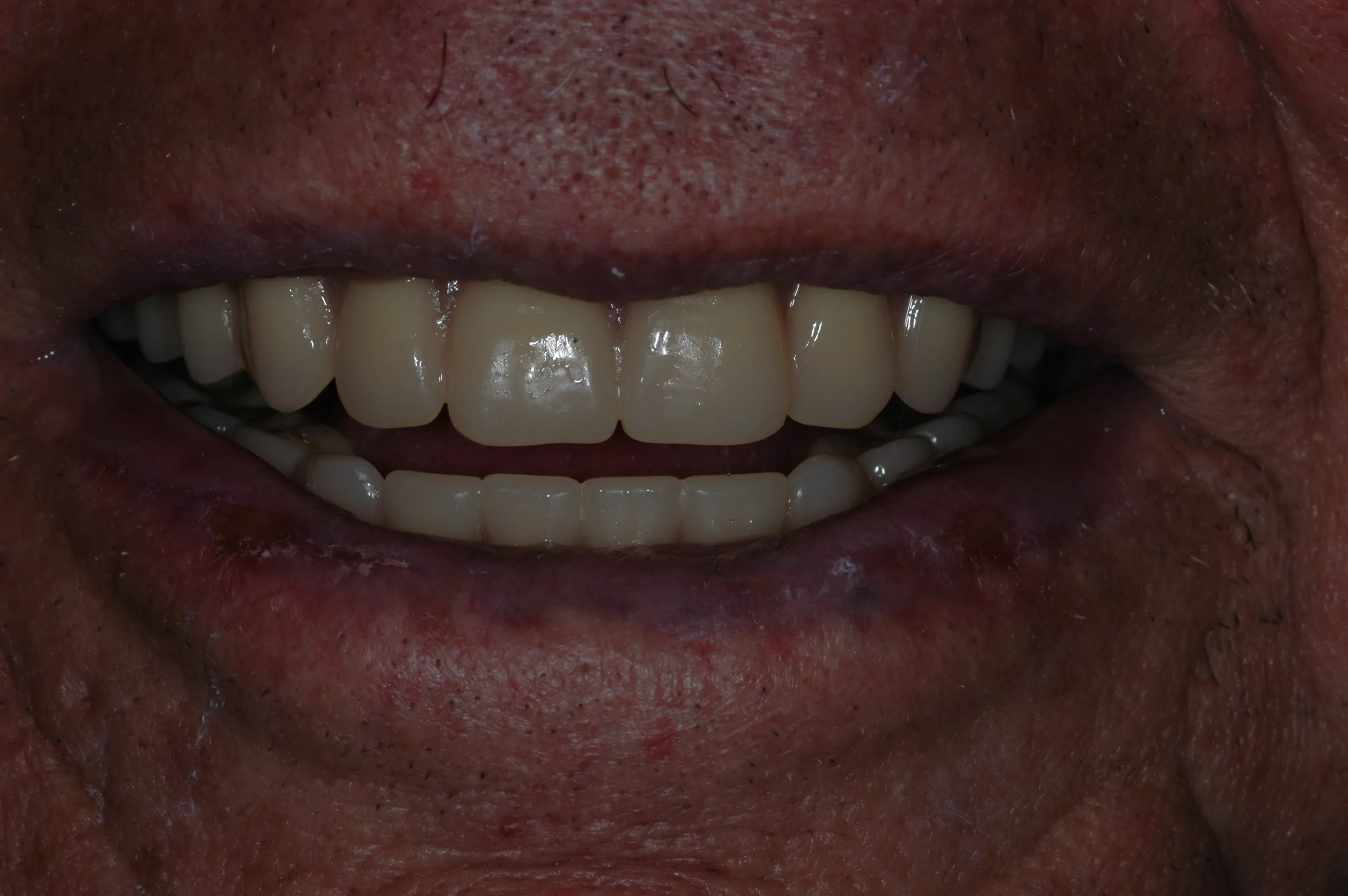
Complete Dentures
Multiple missing and hopeless teeth. Restored with removable complete dentures — esthetics, phonetics, and function all rebuilt.


Custom Dentures — Designed By a Specialist
Complete dentures, immediate dentures, partial dentures, and implant-retained overdentures — designed and tried in by a Board-Certified Prosthodontist with two decades of experience.
When Some or All of Your Teeth Need to Be Replaced
Most patients who arrive needing a denture have lived with the decision for a long time. Many people reach this point after years of teeth being lost one at a time, decades of patches and repairs, or a sudden moment when several teeth have to come out at once. The thought of getting a denture can feel like a step you don't want to take.
What's different here: Dr. Andrus personally selects and arranges the high-impact, wear-resistant denture teeth himself, tries them in your mouth, and lets you see them — before he decides they are acceptable. By doing the arrangement himself instead of outsourcing the design to a lab, he has honed his eye to the small changes a face and a smile may need, and he can make those changes directly for you before the denture is finalized.
What this means for you: a denture is not a one-shape-fits-all appliance. It's a custom restoration designed to your face, your bite, and your existing tissue — set tooth by tooth by a Board-Certified Prosthodontist. For patients who want even more stability, two to four implants can convert a denture into a snap-on overdenture that doesn't move during eating or speech.

Real Denture Cases
Three cases from the practice's smile gallery showing the breadth of removable prosthodontics — conventional dentures, replacement of older worn dentures, and implant-retained snap-on dentures. Click any pair to view full-size.
Complete Dentures
Multiple missing and hopeless teeth. Restored with removable complete dentures — esthetics, phonetics, and function all rebuilt.
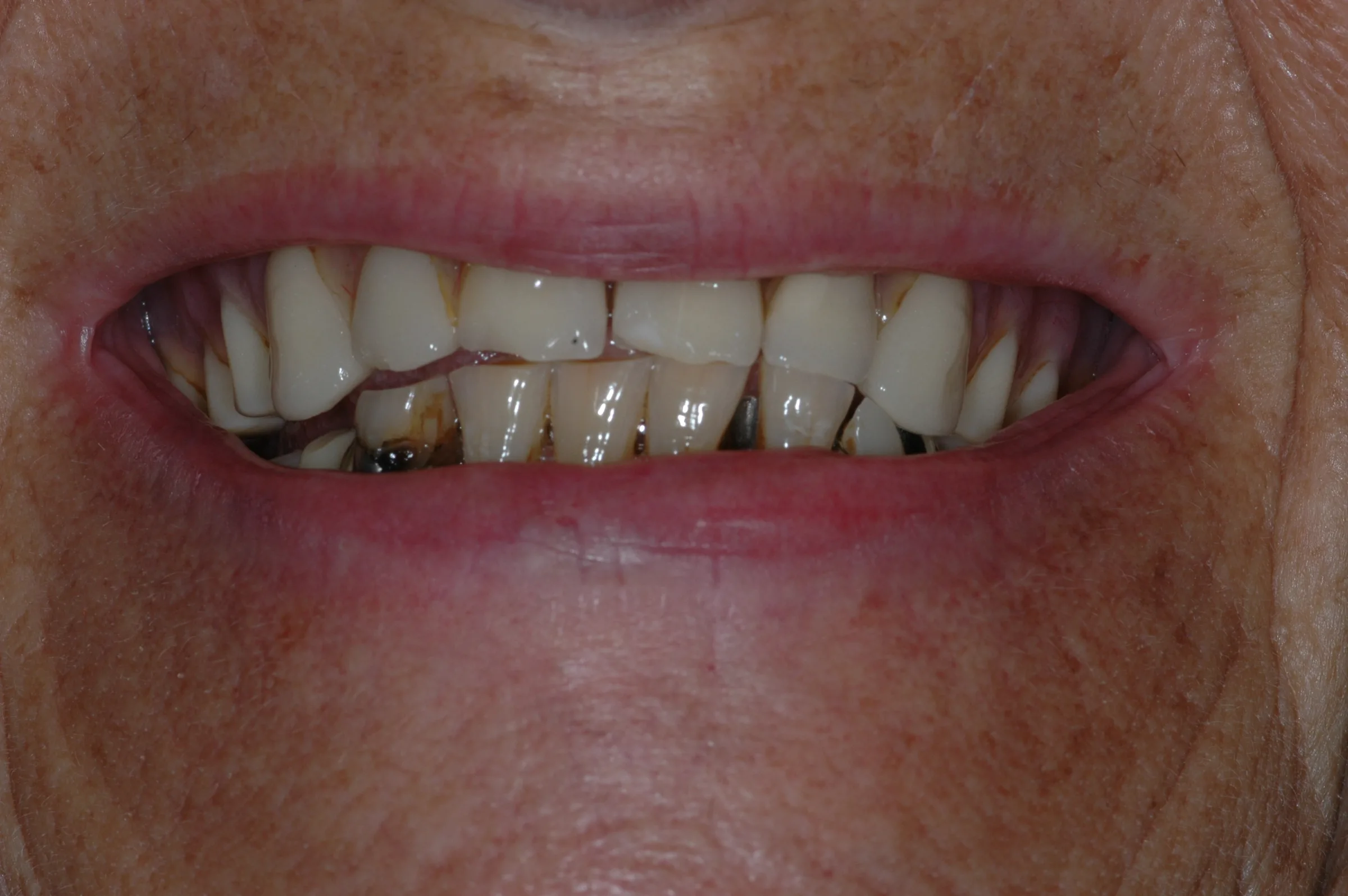
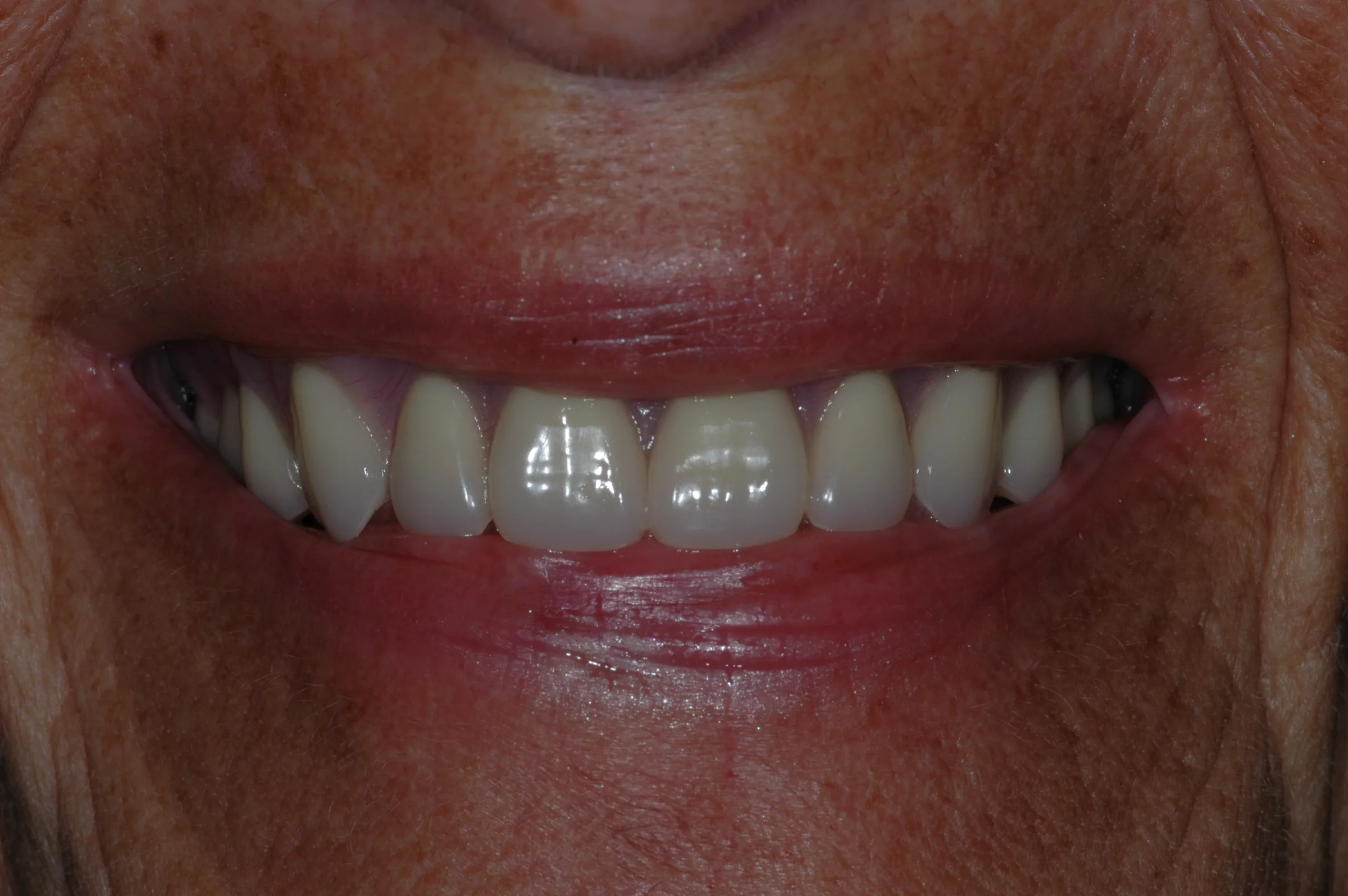
Replacement Dentures
Patient had worn her old dentures too long — the appearance and function had both degraded. New dentures reestablished both.
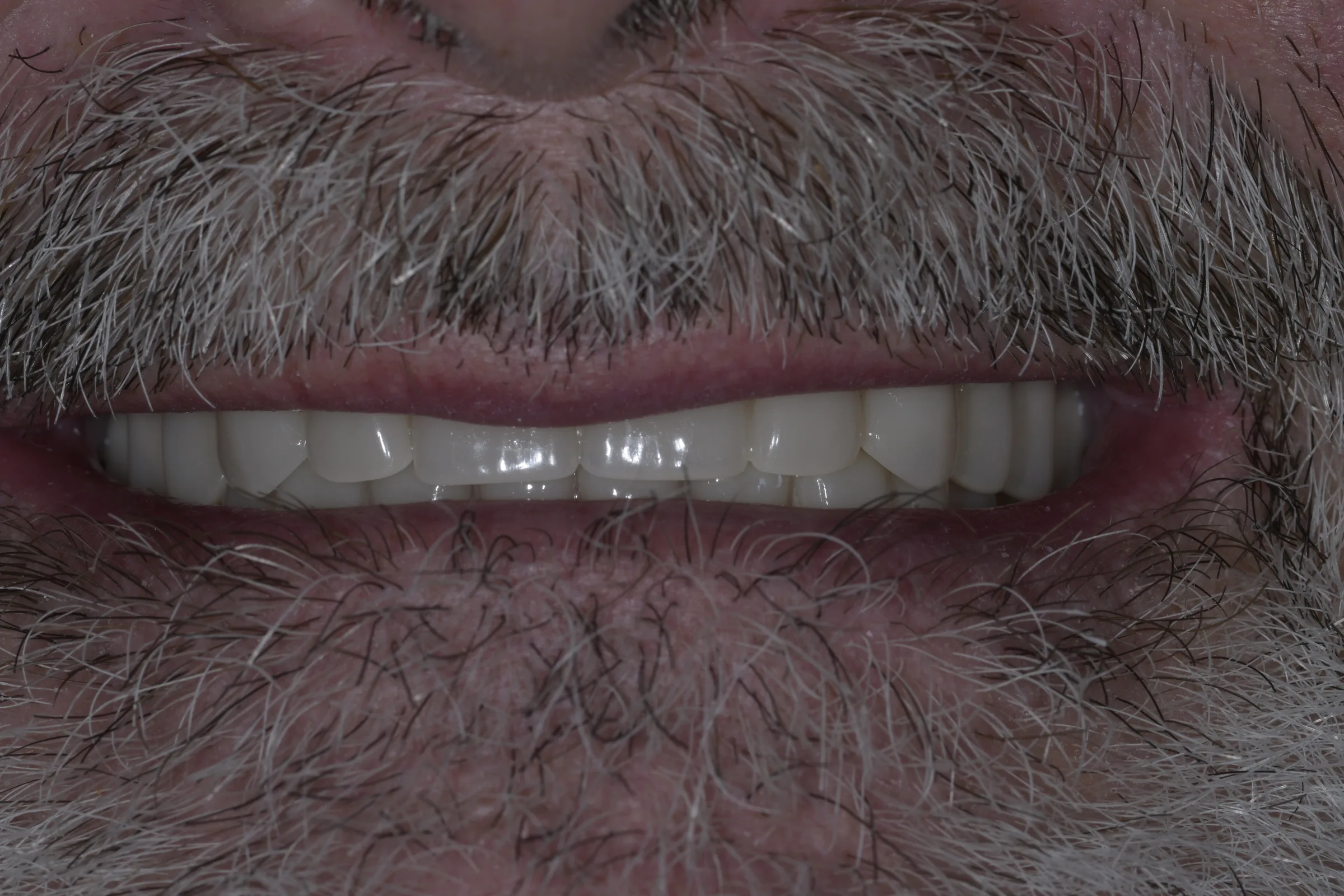
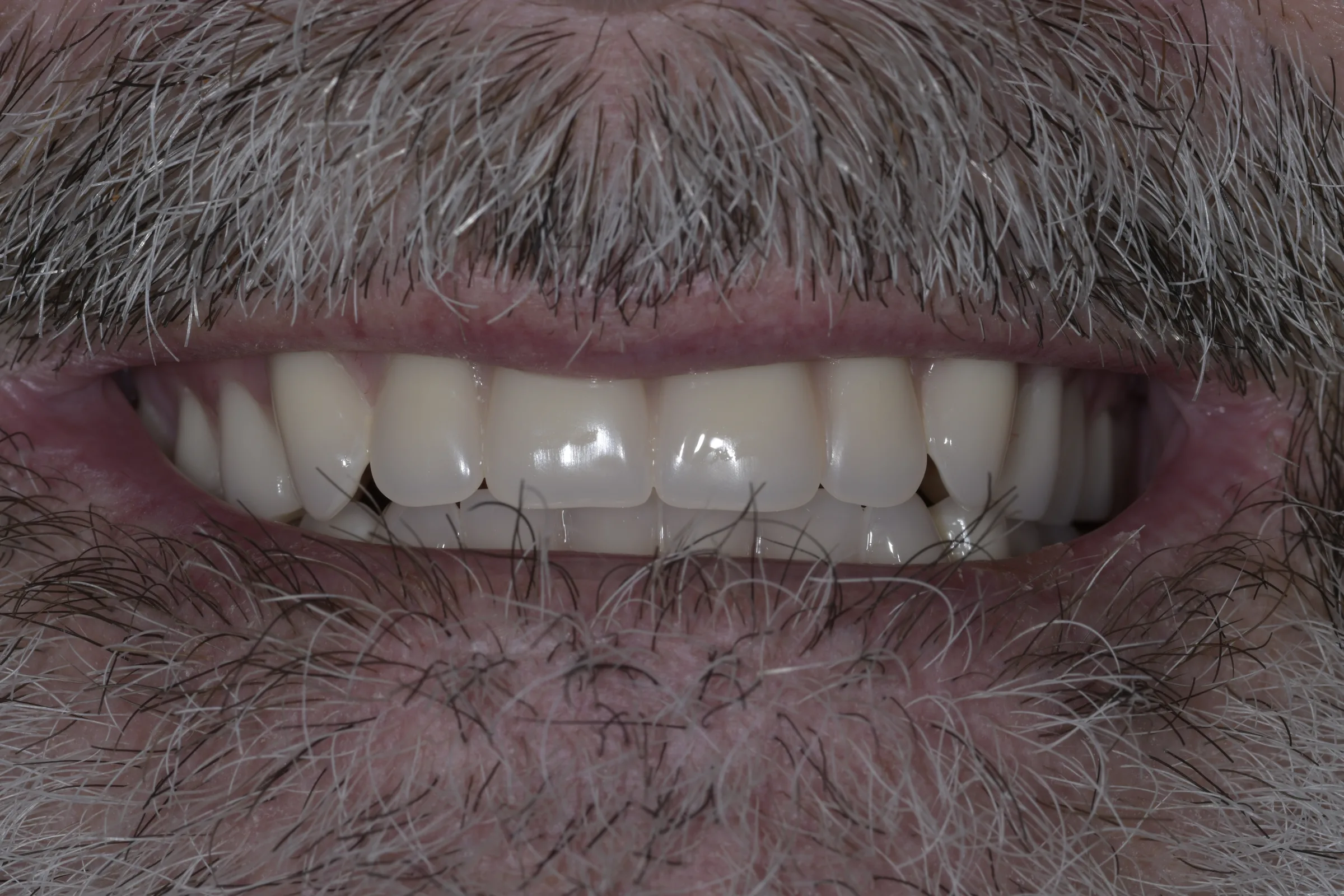
Implant-Retained Dentures
Patient already had dental implants but his older dentures looked worn. New dentures were made to clip onto his existing implants.
The Range of Removable Prosthodontics
The right removable solution depends on how many teeth remain, the condition of the supporting bone and gums, bite stability, and whether implants are part of the treatment plan. Some patients need a temporary transitional solution, while others require long-term removable restoration.
When all teeth in an arch require replacement, complete dentures restore appearance, speech, and chewing function using a removable prosthesis supported by the gums and underlying ridge anatomy. In some cases, dentures also serve as a transitional phase before implant treatment.
Fabricated before extractions and delivered the same day teeth are removed, immediate dentures allow patients to avoid going without teeth during healing. Adjustments, relines, or replacement are often needed as the bone and gums remodel over time.
When healthy natural teeth remain, removable partial dentures replace missing teeth while using the remaining teeth for support and stabilization. Designs may include acrylic or cast-metal frameworks depending on durability, fit, and functional demands.
Implants can improve the stability and retention of removable dentures by reducing movement during eating and speaking. For many patients, implant-retained overdentures provide a major functional improvement without requiring fixed full-arch reconstruction.
How a Denture Case Is Performed
Even denture cases start with a proper workup. The first phase gathers everything needed to design a denture that fits both your mouth and your face:
From there, a wax-up drafts the new denture — teeth set in wax, ready to be tried in your mouth.
The wax-up version of your new denture goes in your mouth at the try-in appointment. This is where the smile line, the lip support, the tooth color, and the bite all get confirmed in your face, in your speech, in your reflection. Why this matters: if the front teeth need to be a bit shorter, if the shade should warm up a touch, if a tooth needs to angle differently to match the way you smile — we change it now. Per the practice's stated philosophy: "Nothing definitive goes in the mouth until the patient has lived with and approved the design."
Once the try-in is approved, the denture is finalized. The teeth set up by Dr. Andrus go to experienced lab technicians for final processing using modern denture-base materials. At delivery the bite is verified, any small contacts are adjusted, and you're given a care plan for the first few weeks of adaptation. Most patients return for one or two short adjustment visits in the first month while the gums settle in around the new fit.
How a Denture Is Built Here
Preparation & Sedation
Your first appointment is a comprehensive consultation: medical and dental history, imaging, an examination of your existing teeth (if any) and tissue, and a long conversation about what you want from the case. No restorative work is started at the first visit.
For patients who need extractions before or with their denture, sedation options include:
For patients with significant dental anxiety, we walk through the visit step-by-step beforehand — so the experience feels predictable rather than overwhelming.
What Sets Dr. Andrus Apart
“In-house denture teeth set up and full-mouth wax-up simulation and prototype fabrication directly done by the prosthodontist.” That's the practice's stated approach — Dr. Andrus does the design and try-in work himself rather than mailing the case to an external lab. Final processing and milling go to experienced lab technicians, but the design decisions stay in-house.
“We always start with a diagnostic wax-up and provisional prototype to test our concept. Nothing definitive goes in the mouth until the patient has lived with and approved the design.” For a removable, that means the smile line, lip support, tooth shape and color are all confirmed at the try-in appointment — before the final denture is processed.
Prosthodontics is the only dental specialty whose three-year residency is dedicated to restoring and replacing teeth — which means dentures are part of the specialty's daily clinical training, not a side skill. Dr. Andrus is a Diplomate of the American Board of Prosthodontics and a Fellow of the American College of Prosthodontists.
Follow-Up & Long-Term Care
Most patients come back for one or two short adjustment visits in the first month while the gums settle in around the new fit. After that, you're on a normal recall schedule — we recommend an annual check of your denture's fit, the condition of your gums and any remaining teeth, and an oral cancer screening. Why this matters: wearing a denture changes how your underlying bone behaves over time, and catching small fit problems early prevents bigger ones.
At home, dentures are cleaned daily with a denture brush and a non-abrasive cleaner (regular toothpaste is too harsh for denture acrylic). Most patients soak them overnight to keep them moist and to give the gums a rest from being covered all day. For partial dentures, the remaining natural teeth need particularly thorough brushing and flossing — the partial's clasps create extra spots where plaque can collect.
Most patients eventually need a reline every two to three years to refit the inside surface of the denture as the underlying ridge changes shape. A full denture replacement comes every 5 to 10 years for most patients. Patients with implant-retained dentures need their attachments (the rubber inserts that grip the implants) replaced every 1–2 years; the implants themselves are typically maintenance-free.
Dr. Andrus Answers
A complete denture replaces ALL the teeth in one arch (upper or lower). It rests on the gums and is held in place by the shape of your ridge plus a thin film of saliva. A partial denture is for when you still have some natural teeth — it replaces the missing teeth and clasps onto the natural ones for stability. Most patients in their 50s and 60s who need a denture start with a partial; complete dentures are more common after all the teeth in an arch have been lost or are no longer salvageable.
Eventually, yes — but there's an adaptation period. The first few weeks you'll start with softer foods cut into smaller pieces. Speech and chewing both adapt over a few weeks as your tongue and cheeks learn the new shape in your mouth. Most patients are eating most foods comfortably within a month. Foods that stay difficult long-term (sticky candies, very chewy meats, raw apples for some patients) are case-dependent. Implant-retained dentures restore close to natural chewing force; conventional dentures restore about 25–40% of natural bite force.
Yes — that's what an immediate denture is for. The denture is fabricated in advance using models of your existing teeth, and placed in your mouth the same day the remaining teeth come out so you never go without teeth. The trade-off: because the gums and bone change shape during healing (over 3–6 months), an immediate denture usually needs a soft reline during healing and a final reline (or sometimes a remake) once healing is complete.
Conventional complete and partial dentures typically last 5 to 10 years before needing replacement — limited mostly by changes to your underlying bone and gums over time, not by the denture wearing out. The teeth on the denture also wear and lose their bite efficiency over time. A reline (refitting the inside surface to match your current ridge) every 2–3 years can extend the life. Implant-retained dentures last longer because the implants stabilize the bone underneath, slowing the bone shrinkage that normally limits a conventional denture's lifespan.
Over time the bone and gum tissue under your denture change shape — your ridge gets smaller and the denture stops fitting as snugly. A reline replaces the inside (gum side) surface of your denture so it fits your current ridge shape, without remaking the whole denture. Most patients need a reline every 2–3 years. Done in our office for most cases, with hard or soft reline materials depending on what your gums need.
Sometimes yes, sometimes no. If the denture itself is in good shape but no longer fits your ridge, a reline can refit the inside surface and extend the life. If the denture's teeth are worn down or the esthetics no longer look right, replacement is usually the better answer. If the looseness has reached the point of falling out during normal use, two to four lower implants can convert the existing denture into a snap-on — often without making a brand-new denture. The right answer depends on what's specifically wrong with the current set.
Conventional complete and partial dentures fall in a wide range depending on materials and complexity. Implant-retained options add the cost of the implants and the attachments. After the initial consultation, we provide a written treatment plan with the cost before any work is started — and we discuss which steps could be staged over time so the cost is more manageable. Financing through Mountain America Credit Union, CareCredit®, and Proceed Finance is available.
We offer both surgical and effective non-surgical options — not a one-size-fits-all approach.
A First Denture, a Replacement, or an Upgrade to Snap-On?
See what removable options fit your case — conventional, implant-retained, or staged over time.