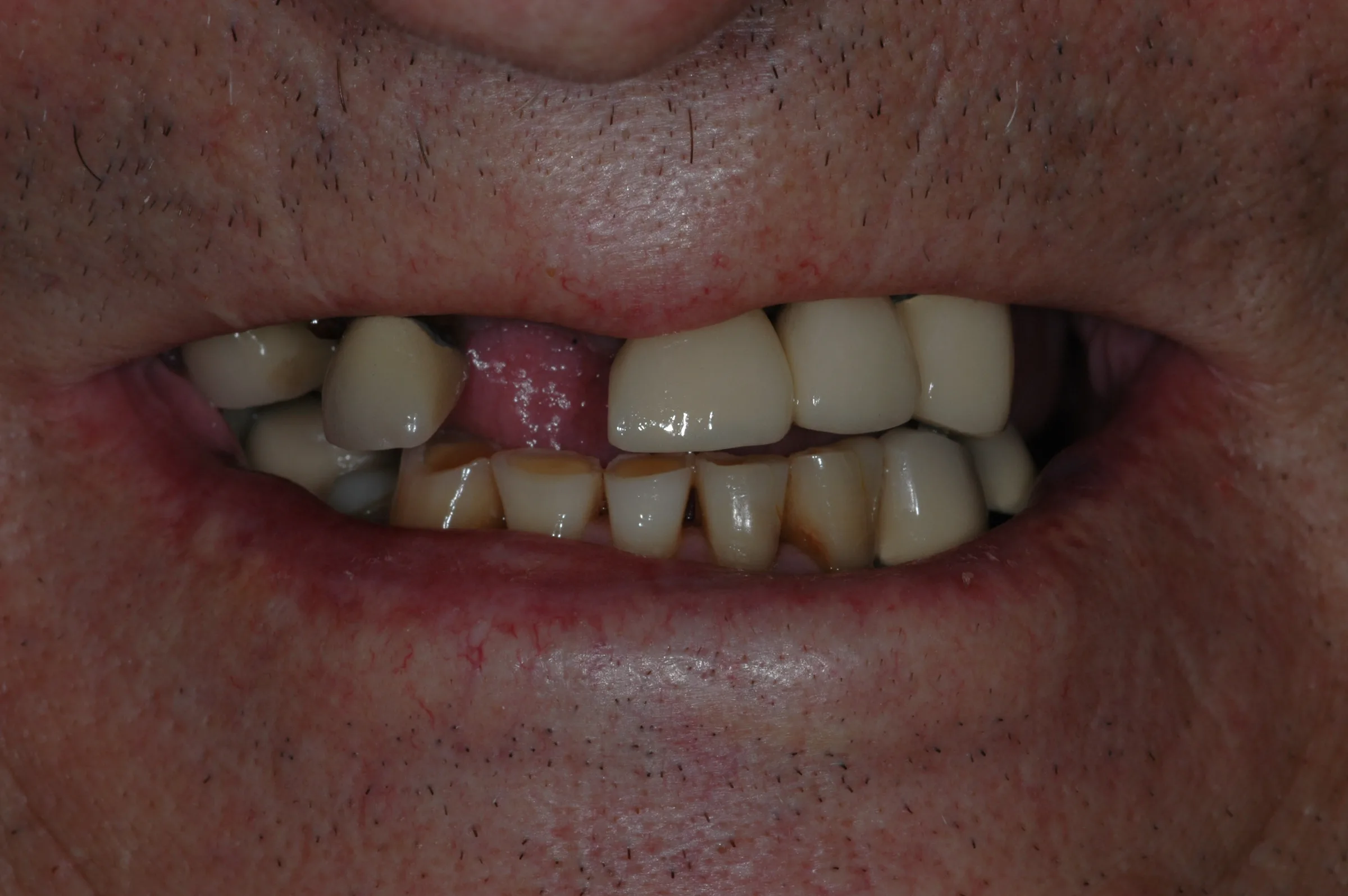
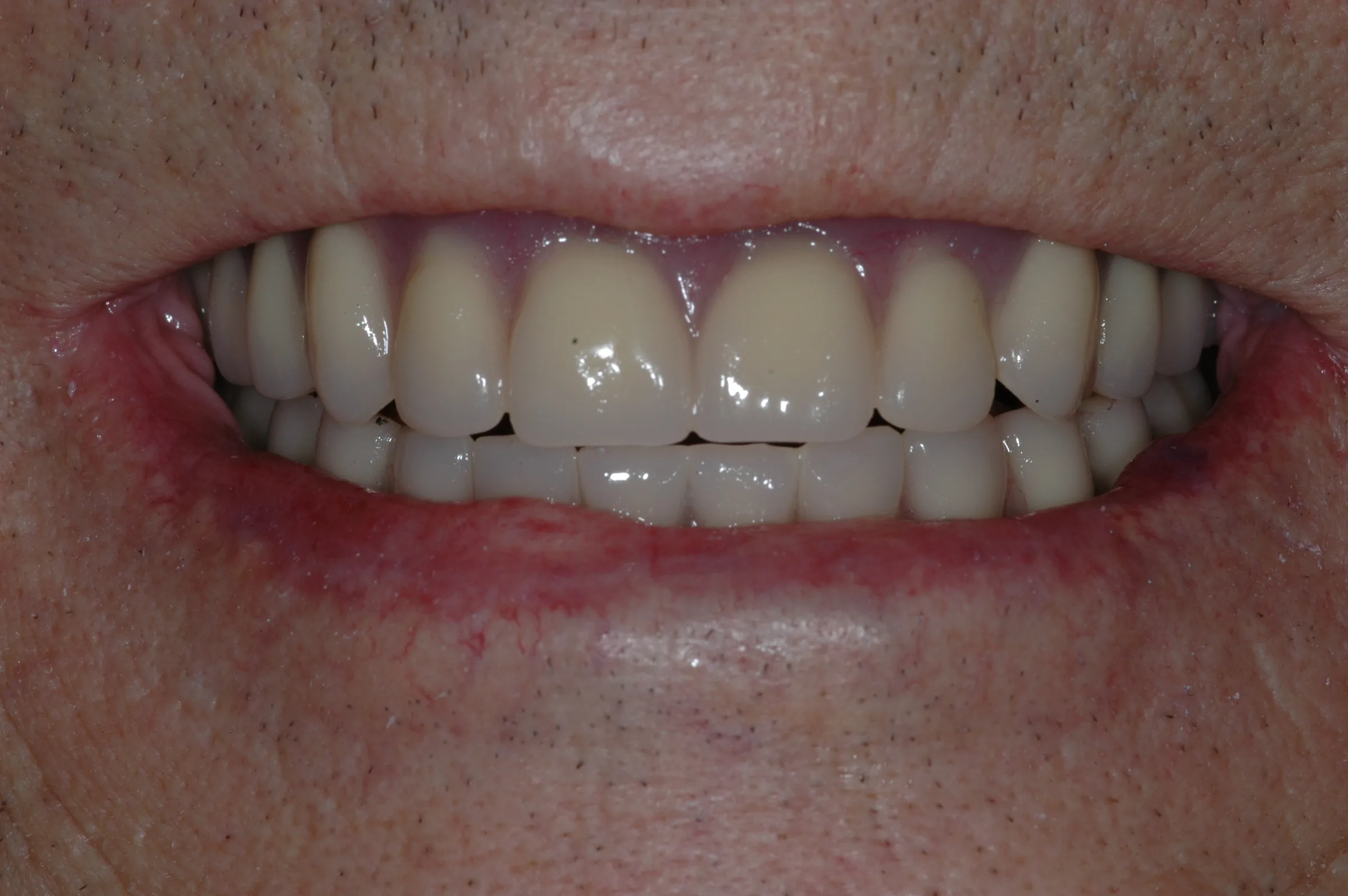
All-on-4 Same-Day Permanent Teeth
Patient had multiple teeth with poor prognosis and compromised function. All-on-4 permanent teeth in a day — fixed-in teeth supported by dental implants, restoring optimal function and appearance.


Permanent. Implant-Supported.
Walk in with damaged or decayed teeth. Walk out the same day with a beautiful, functional new smile.
Restored Chewing Power, Same-Day Smile
If your remaining teeth are failing one by one, if dentures have stopped fitting, or if you can't face years of tooth-by-tooth dental work, fixed-in teeth in a day is often the right answer — permanent teeth attached to dental implants that look and function like natural teeth, delivered in a single coordinated appointment.
Dr. Andrus provides permanently fixed-in teeth supported by dental implants in a one-day procedure. Patients can walk into his office with a mouth full of damaged or decayed teeth and walk out the same day with a beautiful, functional new smile.
Fixed-in teeth give patients the ultimate in chewing power and a beautiful smile. Dr. Andrus has been providing implant-supported fixed-in teeth since 2005. Thanks to his extensive experience and use of advanced technology, his patients can smile and chew with confidence again. This treatment is also called all-on-4 or all-on-X — a form of fixed implant restoration.

Real Fixed-In Cases
Three fixed-in implant cases from the practice's smile gallery — a same-day all-on-4 case, a lower fixed-in with combo upper denture, and a fixed-in using existing implants. Click any pair to view full-size.
All-on-4 Same-Day Permanent Teeth
Patient had multiple teeth with poor prognosis and compromised function. All-on-4 permanent teeth in a day — fixed-in teeth supported by dental implants, restoring optimal function and appearance.
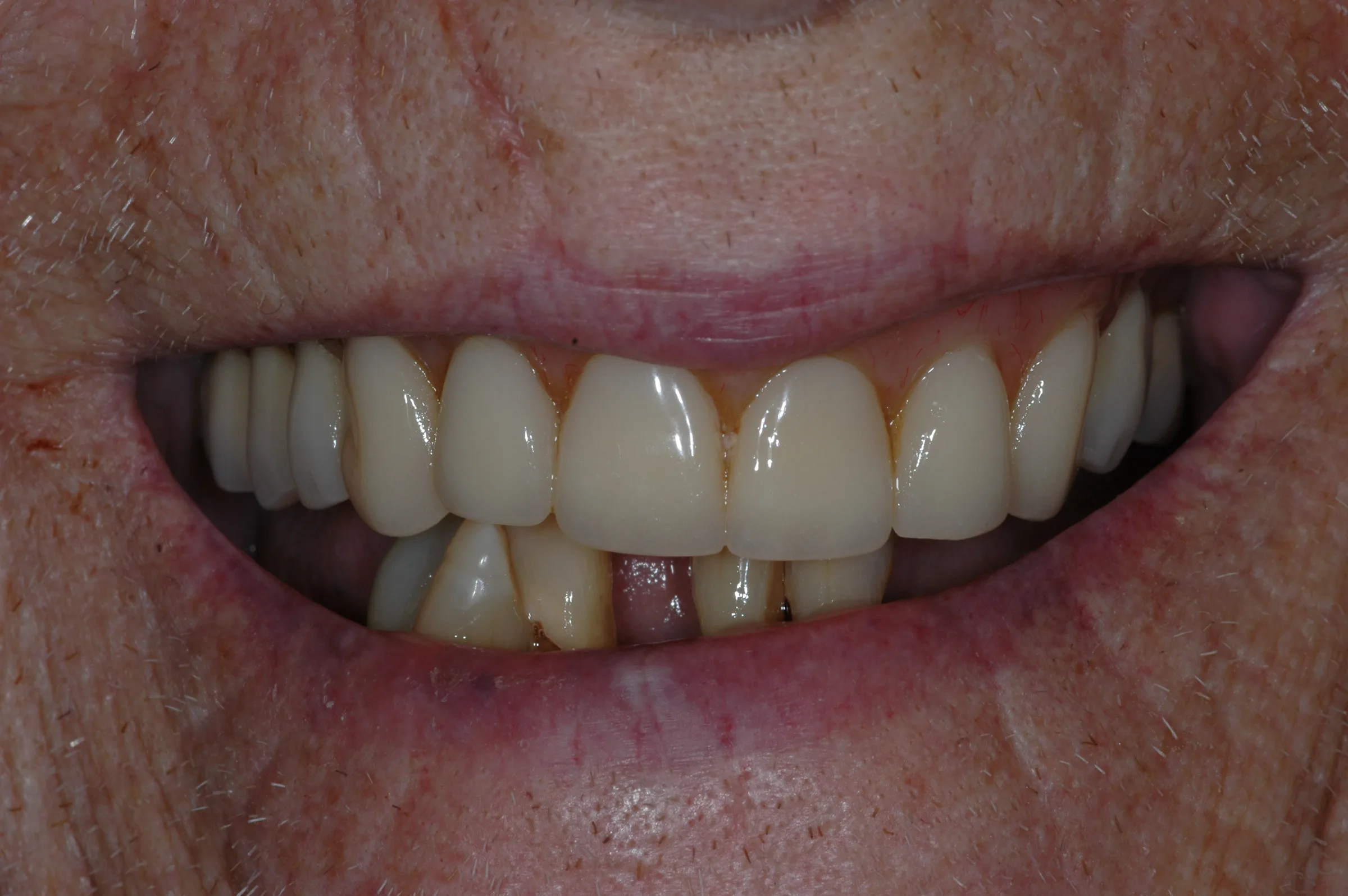
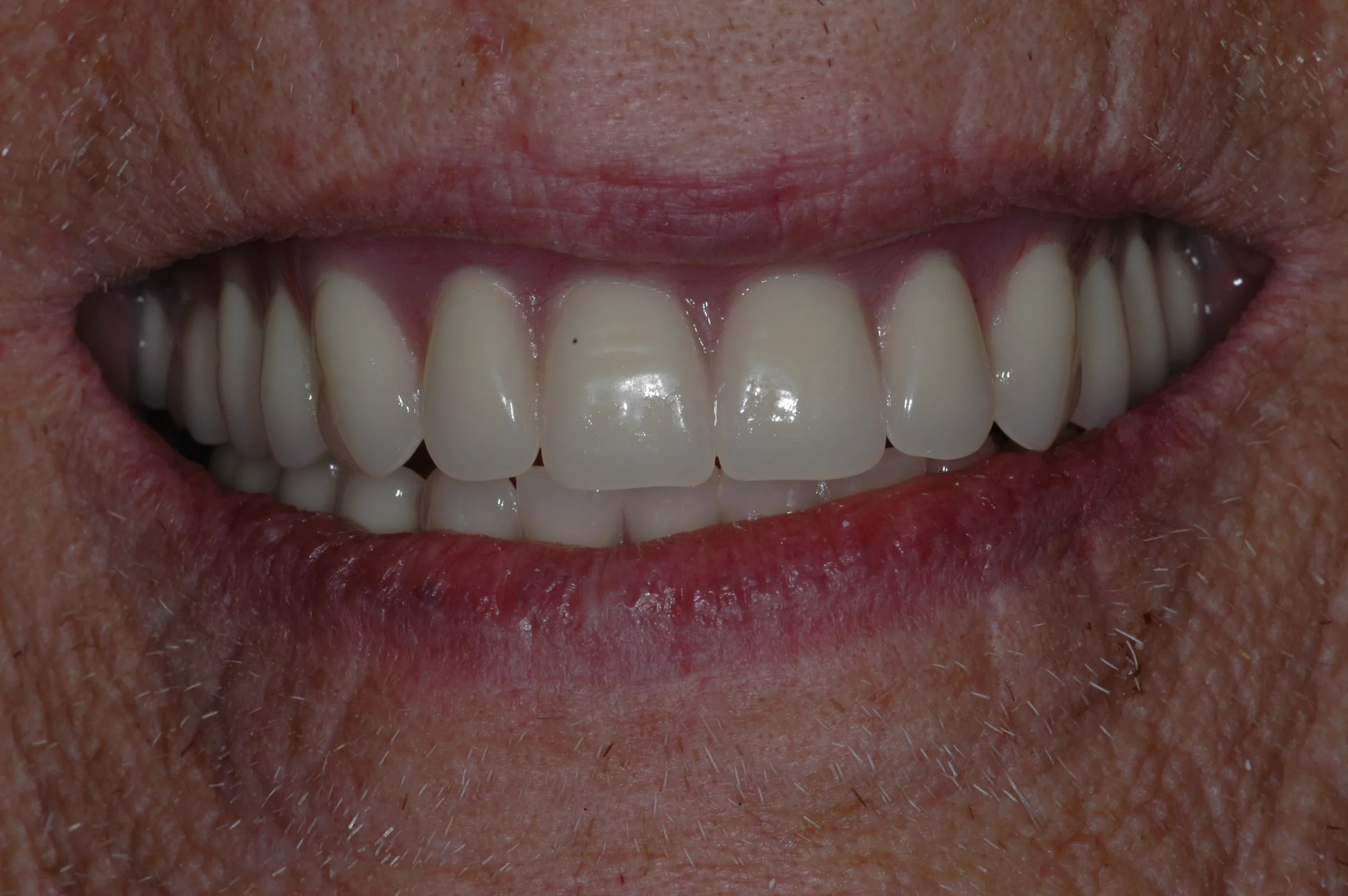
Lower Fixed-In Prosthesis
Patient's failing lower teeth were replaced with a fixed-in dental-implant-supported prosthesis. Upper arch restored with a new removable denture in the same coordinated plan.
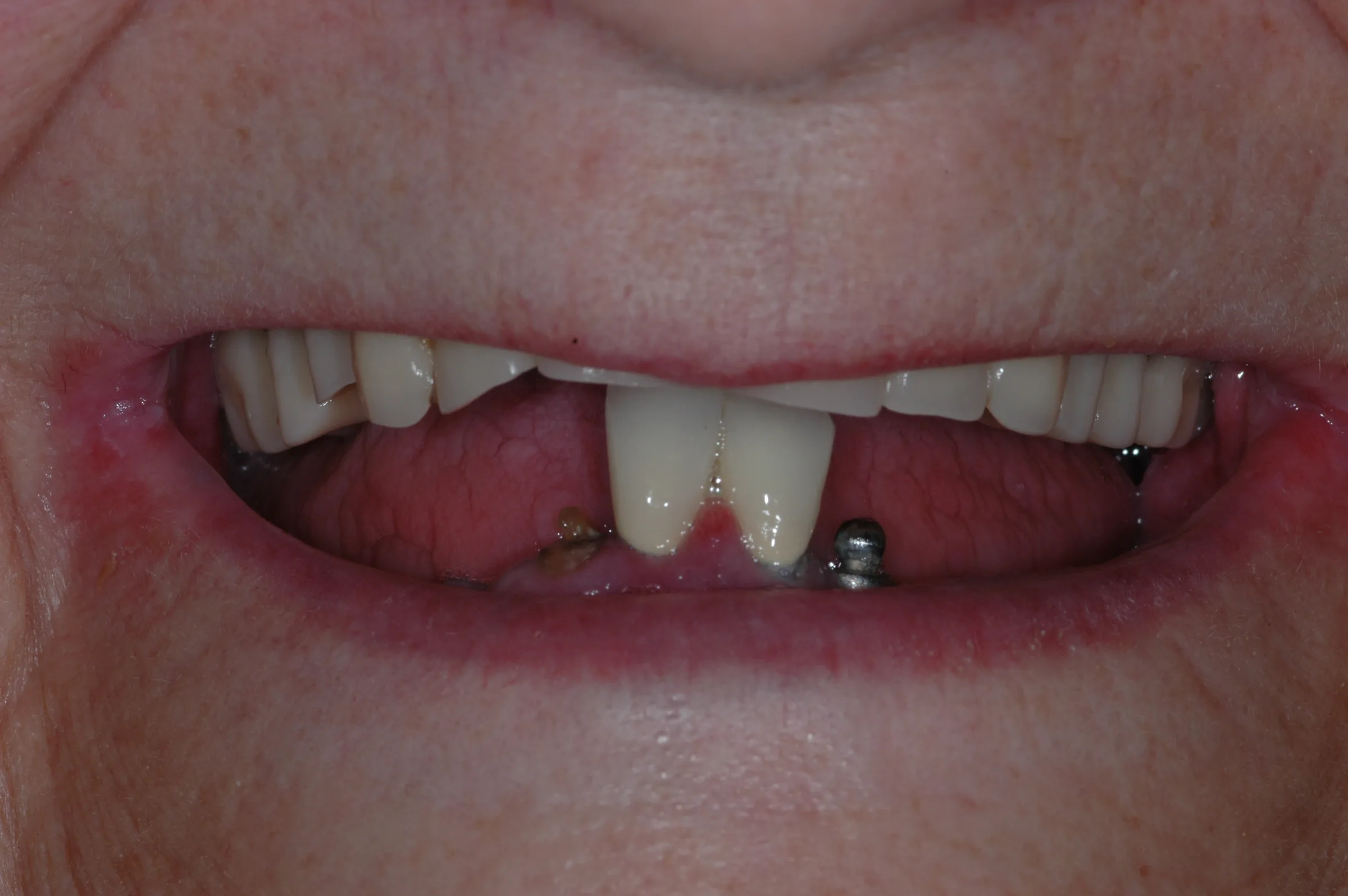
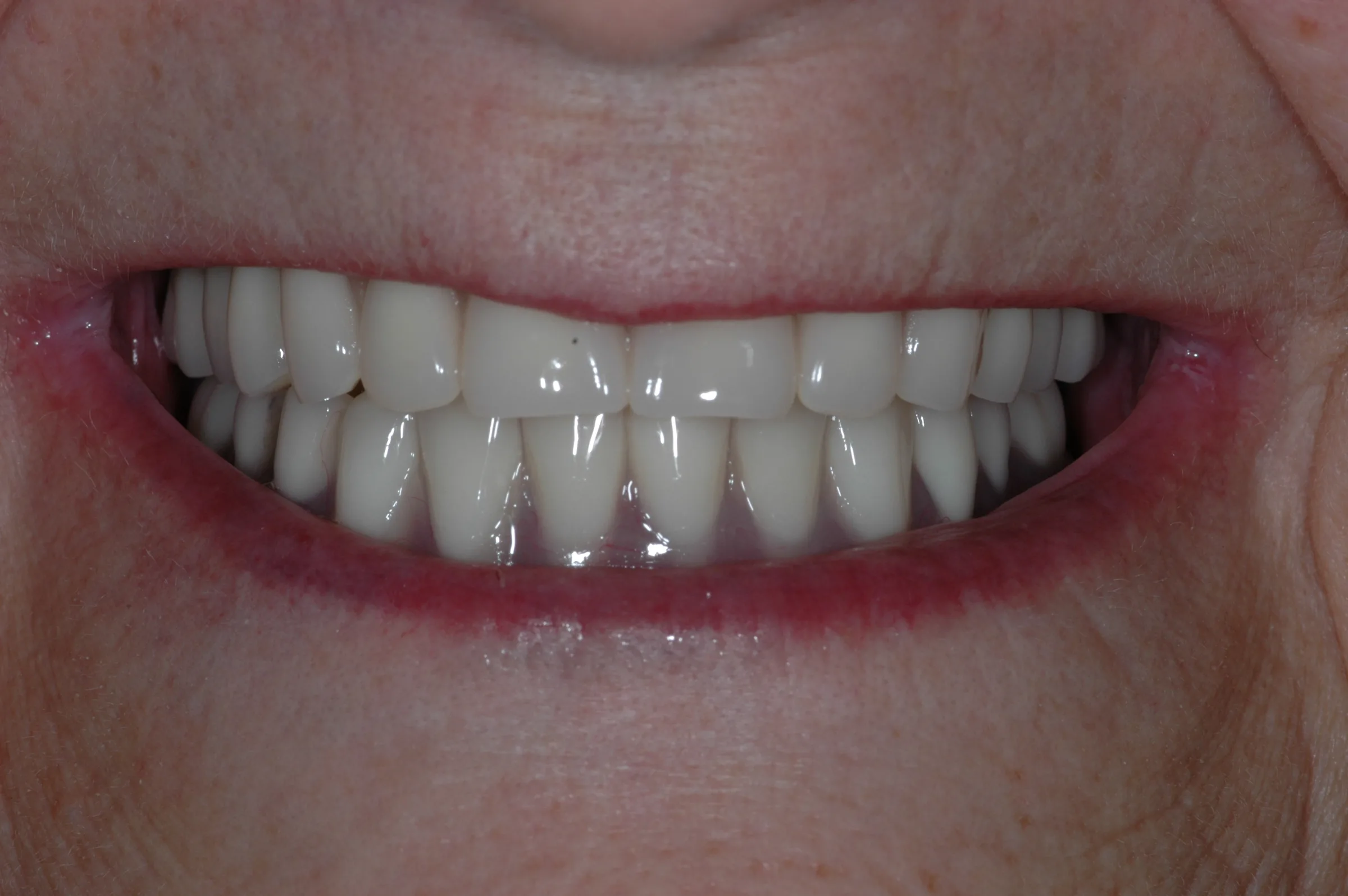
Fixed-In Using Existing Implants
Patient had a worn upper denture and missing lower teeth. Permanent fixed-in implant-supported prosthesis using existing implants, paired with a new removable upper denture.
How It Works
Four to six implants are placed in the areas of densest and highest-volume bone for maximum support.
A full set of temporary teeth is attached to the implants — often this can be done the same day the implants are placed.
The final teeth are made of durable, lifelike materials and are permanently fixed in place, returning full chewing power and a beautiful smile.
The Range of Fixed Full-Arch Treatment
Not every fixed full-arch case follows the same path. Treatment depends on which arch requires restoration, bone availability, existing teeth, bite relationships, healing requirements, and whether the case is staged or completed with immediate provisionalization.
When one arch is failing, severely compromised, or fully edentulous, four to six implants can support a fixed full-arch prosthesis. Lower-arch treatment is often the starting point because lower dentures typically have the least stability.
When both arches require replacement, implants can support fixed restorations for the upper and lower jaws simultaneously or in staged phases depending on healing, bite relationships, and treatment complexity.
Some patients benefit from different solutions in each arch. Common combinations include a fixed lower restoration with an upper removable prosthesis, or phased treatment that transitions from implant-retained overdentures to fixed full-arch restoration over time.
Some cases qualify for same-day temporary fixed teeth placed immediately after implant surgery, while others require a healing phase before restoration begins. The appropriate approach depends on bone quality, implant stability, bite forces, and overall treatment planning.
State-of-the-Art Planning
Detailed planning is vital to the success of the procedure, so Dr. Andrus uses advanced 3D technology — including digital scans, a 3D X-ray and special implant-planning software — to determine the optimal locations in which to place the implants.
"Absolute precision is needed to ensure a successful outcome," says Dr. Andrus. "That's why planning the implant locations and angles in advance in 3D software is so important."
Beautiful, Strong New Teeth
Dr. Andrus designs the teeth that will attach to the implants with meticulous care, and he adjusts the design until the patient is totally happy with how it looks. After the implants are placed, he attaches the provisional teeth the same day. These are worn while the implant sites heal.
The permanent teeth are placed after the implants have fully integrated with the jawbone. These are usually made of zirconia — a very strong and lifelike ceramic.
Materials & Technology
Preparation & Sedation
Your first appointment is a comprehensive consultation: medical and dental history, full-arch CBCT imaging, intraoral scanning, periodontal charting, and a long discussion of your goals. The same-day surgery is a separate appointment — the planning workup happens first.
For the implant placement appointment, sedation options include:
For complex cases, parts of the case may be coordinated with an oral surgeon or other specialist — with the prosthodontic plan staying with this practice.
What Sets Dr. Andrus Apart
Dr. Andrus has published peer research on implant superstructures for the completely edentulous (Journal of Dental Technology, 2011) — the engineering of full-arch fixed-in prostheses. That depth of academic engagement matters most on cases where standard all-on-4 protocols don't quite fit.
Dr. Andrus is a Diplomate of the American Board of Prosthodontics and a Fellow of the American College of Prosthodontists, with three years of full-time specialty residency at the University of Iowa. He has been providing fixed-in implant teeth since 2005.
"Absolute precision is needed to ensure a successful outcome," Dr. Andrus says. "That's why planning the implant locations and angles in advance in 3D software is so important." Cone beam CT, digital scanning, and custom surgical guides are standard on every fixed-in case.
Patient Comfort & Financing
Dr. Andrus and his team want only the best for their patients and provide friendly, gentle care every step of the way. Sedation is available to keep patients comfortable during the procedure.
To ensure the treatment will fit your budget, Dr. Andrus offers flexible, affordable financing options through Mountain America Credit Union, CareCredit® and Proceed Finance.
Follow-Up & Long-Term Outcomes
After the same-day temporary teeth are placed, you return for short check-ups during the 3-6 month healing phase to confirm the implants are integrating with the bone correctly. Once the permanent teeth are placed, you're on a normal recall schedule — every six months for hygiene, an evaluation of the implants and surrounding gum tissue, and a check of the prosthesis itself.
Fixed-in teeth are brushed and flossed differently from natural teeth — a water flosser or floss threader cleans under the prosthesis where regular floss can't reach. We walk you through the technique at the delivery appointment and again at the first recall.
With consistent home care and routine recall, the implants themselves can last a lifetime. Implant survival rates for full-arch cases exceed 95% at ten years. The zirconia prosthesis typically lasts 15-25 years before any replacement is needed. Patients who grind benefit from a custom night guard to protect the ceramic from cracking.
Dr. Andrus Answers
It's the marketing term for what dentists call all-on-4 (or all-on-X) full-arch implant restoration. Four to six dental implants are placed strategically in your jaw, and a full set of teeth is permanently attached to those implants. The teeth don't come out — you brush and floss them like natural teeth. "In a day" refers to the same-day temporary teeth — the implants and a working set of teeth are delivered in a single appointment, so you don't go home without teeth.
Most patients with adequate jawbone are candidates. The diagnostic workup checks bone height, width, and density, plus the position of nerves and the sinuses. Patients with severely limited bone may need bone grafting first, or may be better candidates for a snap-on denture. Patients with active gum disease or unrelated medical issues may need to address those first. The consultation answers candidacy definitively.
The implant placement and same-day temporary teeth happen in one appointment — typically half a day. The implants then integrate with your bone over three to six months while you wear the temporaries. After integration, the final permanent teeth are made and attached. Total timeline: 3-6 months from start to permanent teeth.
No — that's a key distinction. The same-day teeth are functional provisionals that let you chew, smile, and live normally during the healing phase. They're designed to look natural and work well, but they're not the final restoration. The permanent teeth come after the implants have fully integrated and are made of zirconia — a much stronger, more lifelike ceramic that's designed to last decades.
Closer than any removable denture can match. Fixed-in implant teeth restore close to natural chewing force — patients eat steaks, salads, corn on the cob, and apples. Speech is clear because the teeth aren't covering your palate (no upper denture plate). The teeth are brushed and flossed with a water flosser or floss threader to clean under the prosthesis. Most patients describe the feel as "like my own teeth, but better than they've been in years."
Fixed-in full-arch implant restorations are a significant investment — substantially more than conventional dentures or snap-on dentures, but less than replacing every tooth one at a time with individual implant crowns. Cost varies based on number of implants, materials chosen for the final teeth, and whether extractions or grafting are needed. After the diagnostic workup we provide a written treatment plan with the exact cost. Financing through Mountain America Credit Union, CareCredit®, and Proceed Finance is available.
Implant survival rates for full-arch cases are high — well over 95% at 10 years with proper planning and home care. If an individual implant fails, the prosthesis can usually be removed, the implant site evaluated, and a replacement implant placed. The remaining implants continue to support the prosthesis during the repair. Routine recall visits catch potential issues early so they can be addressed before they become bigger problems.
We offer both surgical and effective non-surgical options — not a one-size-fits-all approach.
Life-Changing Treatment